 EN
EN

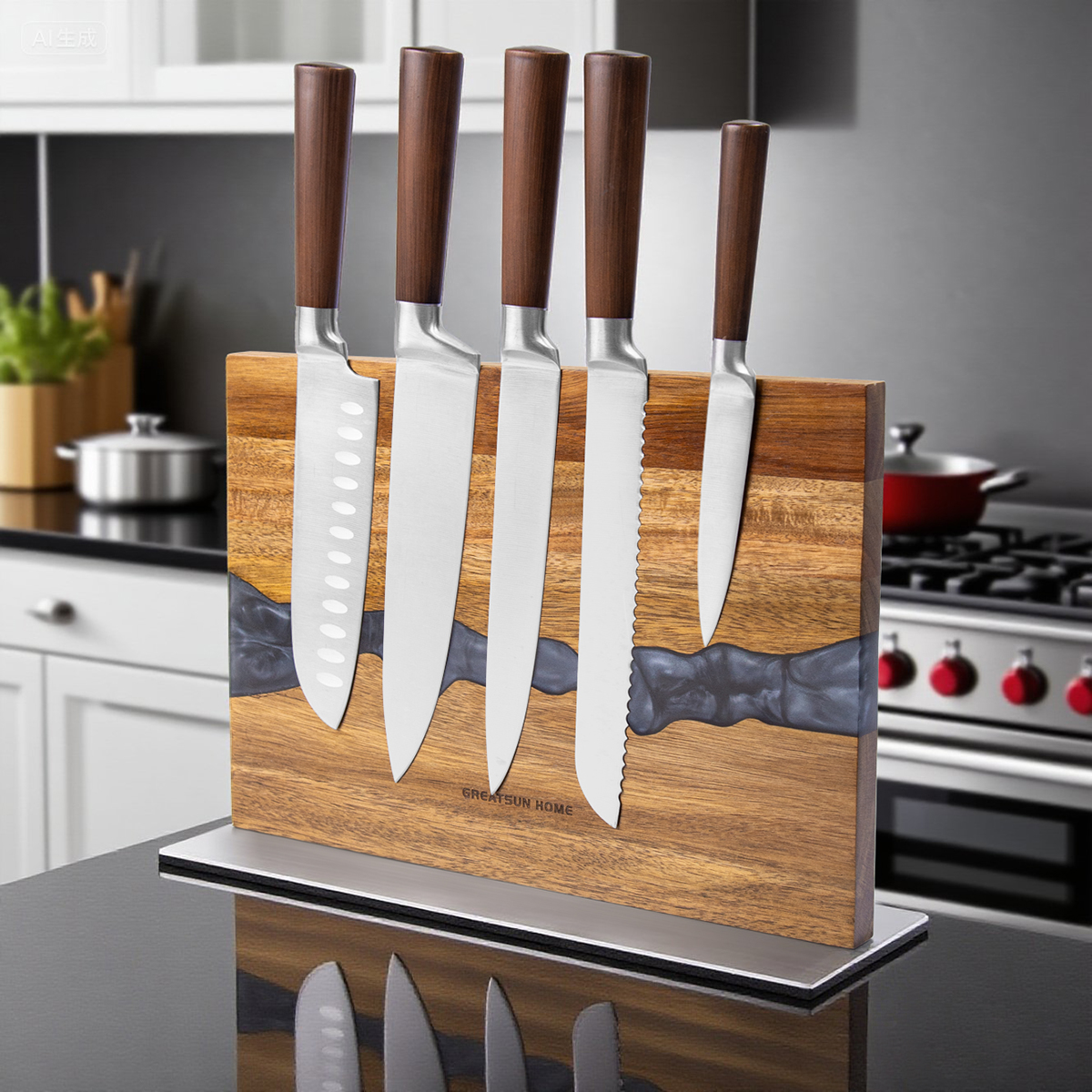
How Material Structure Affects Bacterial Survival in Knife Blocks
Wood’s Natural Porosity: Capillary Trapping and Microbial Inactivation
The natural properties of wooden knife blocks help fight off microbes. Moisture gets absorbed into tiny channels in the wood, and the capillary action pulls bacteria down into the grain away from where knives actually touch. This is where nature's own defenses kick in. For instance, walnut contains tannins while maple has phenols that mess with bacteria cells and speed up their death. Maple and bamboo seem especially good at cutting down bacteria numbers pretty quickly, mostly because they dry out microbes and stop their enzymes from working properly. How well this works really varies depending on factors like how dense the wood is, which way the grain runs, and how much natural oils are present. Just remember though, some types of wood do this job better than others.
Plastic’s Non-Porous Surface vs. Hidden Biofilm Niches in Knife Block Slots
The smooth surface of plastic seems clean at first glance but actually hides some serious hygiene problems. When knives get stuck in those slots over and over again, tiny scratches form that catch food particles and hold onto moisture in all those little channels running vertically through the material. What happens next? These damp, dirty conditions become perfect breeding grounds for stubborn biofilms, especially nasty ones like Salmonella and Listeria that just won't go away no matter how many times someone cleans them. Studies show these biofilm colonies can bounce back within two days after disinfecting plastic surfaces. Wood works differently though. It doesn't let microbes hang around as long because it absorbs moisture naturally and has properties that slowly reduce bacteria populations over time.
Scientific Evidence on Knife Block Hygiene: What Studies Really Show
Revisiting the 'Self-Sterilizing Wood' Myth: Limitations of Early Lab Studies
Some early lab tests claimed wood surfaces can basically clean themselves, but these were done in very controlled environments where wood samples got hit with super concentrated amounts of E. coli or Salmonella at perfect humidity and temperature levels. That's nothing like what happens in an actual kitchen. The wood does pull some microbes down into its pores through capillary action, but they're still there underneath. What these studies completely missed was how slots and grooves collect food particles over time, plus all the constant wetting and drying cycles that happen in real life situations. Plastic cutting boards actually start off dirtier on the surface, but since they don't have pores, they're much easier to clean thoroughly as long as someone actually takes the time to maintain them properly.
Real-World Contamination Patterns in Wooden and Plastic Knife Blocks
Field-based assessments reveal divergent risk profiles:
- Wooden blocks trap bacteria deeper in pores, limiting surface exposure and promoting faster desiccation. One peer-reviewed study found 60% lower Listeria monocytogenes recovery from maple blocks versus plastic after 24 hours under typical kitchen humidity.
- Plastic blocks, especially those with vertical slots, accumulate moisture and debris in micro-scratches. Dishwasher use accelerates degradation: warped slots harbor up to three times more pathogens than intact surfaces (Ponemon Institute, 2023).
Hybrid usage—such as transferring knives between plastic blocks and wooden cutting boards—increases cross-contamination risk. Regardless of material, consistent cleaning and thorough drying remain non-negotiable for food safety.
Material-Specific Risks and Practical Hygiene Trade-offs for Knife Blocks
Maple, Bamboo, and Walnut: Antimicrobial Efficacy Differences in Common Knife Blocks
Not all wood types deliver equivalent hygiene performance. Key distinctions include:
- Bamboo, with its high silica and lignin content, inhibits Escherichia coli survival by up to 40% compared to maple in controlled trials.
- Maple, while dense and durable, requires regular food-grade mineral oil application to limit moisture absorption—unsealed maple can retain water in pores, fostering mold and diminishing antimicrobial activity.
- Walnut contains natural oils with moderate antimicrobial effects, though efficacy varies significantly across batches due to growth conditions and processing methods.
All wood types experience declining antimicrobial performance after repeated wet-dry cycles—especially in high-moisture environments governed by HACCP protocols.
Plastic Knife Blocks: Cracking, Moisture Trapping, and Long-Term Sanitation Challenges
Plastic knife blocks are often marketed as “low-maintenance” and “hygienic,” yet real-world performance tells a different story:
- Polypropylene slots develop micro-fractures within 6–12 months of daily use—creating irreversible reservoirs for moisture and microbes.
- Non-porous surfaces promote anaerobic micro-environments where biofilms thrive; pathogen recovery rates in scratched plastic slots are over 200% higher than on wood’s surface (Journal of Food Protection, 2023).
- Chemical disinfectants—including bleach and quaternary ammonium compounds—accelerate polymer degradation, worsening surface integrity over time.
Commercial kitchens report replacing plastic knife blocks 2.3× more frequently than hardwood alternatives due to irreparable slot damage. Unlike wood, plastic offers no intrinsic bioactive defense—once surface integrity fails, sanitation relies entirely on user diligence.
Effective Cleaning Strategies for Both Wooden and Plastic Knife Blocks
Maintaining knife block hygiene requires consistent, material-appropriate cleaning. For both types:
- Remove all knives weekly and invert the block to dislodge crumbs and debris
- Use compressed air or a vacuum attachment with a narrow nozzle to clear deep slot residue
- Wipe exteriors with a damp cloth and mild soap, then dry thoroughly before returning knives
For wooden blocks:
Moisture retention is the primary concern—porous structure invites mold if not fully dried. During monthly deep cleaning:
- Insert a pipe cleaner dipped in diluted bleach solution (1 tbsp unscented bleach per gallon of water) into each slot
- Follow with a water-dampened pipe cleaner to rinse residual bleach
- Air-dry upright and unobstructed for at least 24 hours—critical to prevent regrowth of moisture-dependent microbes
For plastic blocks:
The priority is biofilm disruption in hidden niches:
- Inspect slots monthly for cracks, warping, or discoloration—discard if damage is visible
- Apply 70% isopropyl alcohol via cotton swab directly into crevices to penetrate biofilm matrices
- Allow ⩾8 hours of unobstructed air-drying to fully evaporate trapped moisture
Never submerge either material. Prioritize designs with removable panels, horizontal slots, or open-front configurations to improve access and airflow. Consistent drying remains the single most effective hygiene intervention—microbial counts rebound rapidly when wood moisture exceeds 15% or when water pools in plastic imperfections.
FAQ
Are wooden knife blocks better than plastic ones for food safety?
Wooden knife blocks can naturally absorb moisture and trap bacteria within their pores, reducing surface exposure. However, they require proper maintenance, such as regular drying, to ensure food safety. Plastic blocks, while easier to clean, can hide biofilms in scratches, requiring diligent cleaning practices.
How often should I clean my knife block?
It's recommended to clean your knife block weekly by removing knives, inverting the block to remove debris, and wiping it down with a damp cloth. Monthly deep cleaning is advised to ensure thorough hygiene, especially in hidden slots.
What is the best way to disinfect a wooden knife block?
For wooden blocks, insert pipe cleaners dipped in a diluted bleach solution into each slot, rinse with water-dampened pipe cleaners, and air-dry for at least 24 hours to prevent mold and bacteria regrowth.
Can plastic knife blocks harbor bacteria even if they look clean?
Yes, plastic knife blocks can develop scratches and micro-fractures that trap moisture and create breeding grounds for biofilms, even if they appear clean on the surface. Regular inspection and cleaning are necessary to mitigate this risk.