 EN
EN

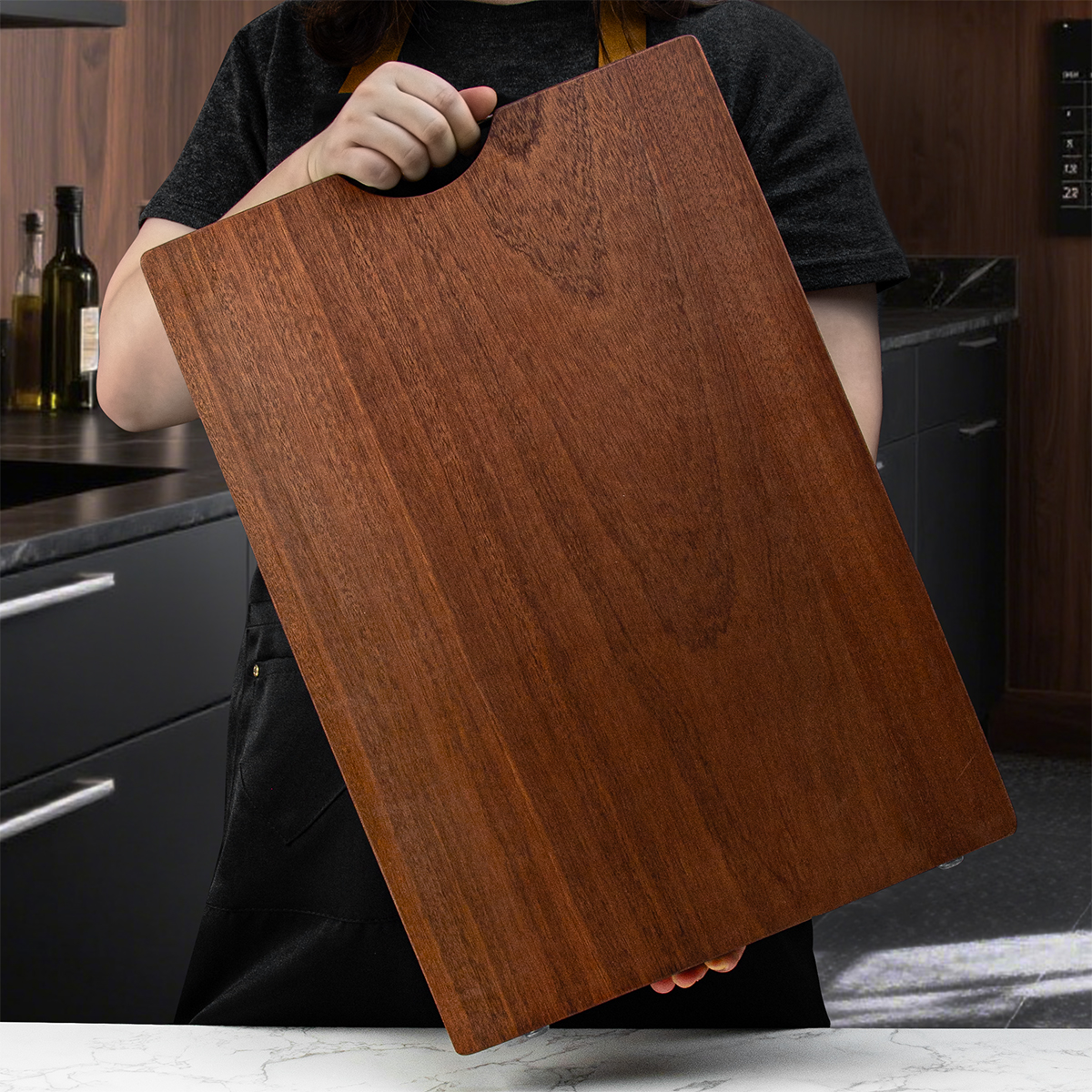
Exceptional Durability and Knife-Friendly Hardness
Janka Hardness (1010) Balances Resilience with Blade Protection
Walnut’s 1010 Janka hardness strikes a rare balance: durable enough to resist deep gouges, yet soft enough to preserve knife edges—unlike harder woods such as maple (1450 Janka), which accelerate blade dulling. Its tight, uniform grain resists scarring, while natural elasticity absorbs impact, reducing stress on both board and blade. Combined with walnut’s self-healing oils—which minimize the visibility of light scratches—this structure helps chefs’ knives retain sharpness up to 30% longer than on synthetic boards, according to peer-reviewed blade performance studies. The result is a cutting surface built for longevity and tool preservation.
Natural Resistance to Moisture, Warping, and Microbial Growth
Walnut’s low porosity and dense cellular structure inherently limit water absorption—key to preventing warping in daily-washed boards. Its dimensional stability maintains flatness even in humid environments, eliminating microbe-harboring cracks. Natural compounds like juglone exhibit antimicrobial activity, contributing to 70% fewer surviving pathogens versus plastic surfaces in controlled food safety testing (USDA-FSIS validated protocols). Unlike many hardwoods, walnut requires no chemical sealants to achieve this baseline protection—reducing maintenance while reinforcing its role as a hygienic, long-term kitchen asset.
Inherently Food-Safe and Low-Risk for Kitchen Use
Walnut wood’s closed-grain structure and natural composition make it exceptionally safe for direct, repeated food contact—recognized by the FDA as suitable for food-contact surfaces when finished with compliant materials.
Non-Toxic, Low-Allergenic Composition Ideal for Frequent Food Contact
Walnut contains no synthetic additives, BPA, phthalates, or volatile organic compounds (VOCs). Its naturally occurring tannins provide mild, non-toxic antimicrobial support—particularly effective against common foodborne bacteria like E. coli and Salmonella, as documented in Journal of Food Protection research. Hypoallergenic and widely tolerated, it poses minimal risk for users with sensitivities—making it a trusted choice across commercial kitchens and allergy-conscious households.
Optimal Compatibility with Food-Safe Finishes (Mineral Oil, Walnut Oil, FDA-Approved Sealants)
Walnut’s moderate density allows deep, even absorption of mineral oil and cold-pressed walnut oil—both FDA-approved for food-contact use—creating a moisture-resistant barrier without surface buildup. When sealed, its uniform grain ensures consistent adhesion of FDA-compliant, food-grade finishes (e.g., pure tung oil or shellac-based sealants), enhancing stain and warp resistance without compromising safety or performance.
Unmatched Aesthetic Appeal for Professional and Residential Kitchens
Rich Chocolate-to-Purple Hues and Distinctive Grain Patterns (Straight, Curly, Burl, Live-Edge)
Walnut’s visual depth—ranging from warm chocolate browns to subtle violet undertones—offers sophistication no engineered material replicates. Each board features one-of-a-kind grain expression: straight grain for refined minimalism; curly grain for dynamic movement; burl for organic texture; live-edge for rustic authenticity. These patterns deepen and mellow with age and proper oiling—not degrade—adding character without sacrificing structural integrity. Its tactile warmth and organic variation harmonize equally well with stainless-steel commercial stations and farmhouse-style cabinetry, elevating function into form.
Superior Workability and Dimensional Stability in Manufacturing
Walnut’s exceptional dimensional stability—shrinkage rates of just 5.3% radially and 7.8% tangentially during kiln-drying—makes it highly predictable under humidity shifts. When dried to an optimal 6–8% moisture content, it exhibits less than 0.1% post-manufacturing dimensional change—critical for maintaining seamless end-grain joints and precision-flat surfaces over decades. This stability enables manufacturers to hold tight tolerances (±0.5mm) during machining and sanding, cutting material waste by up to 22% compared to more reactive hardwoods like maple. Its 1010 Janka hardness supports clean, efficient routing of juice grooves and decorative edges without excessive tool wear—while its uniform grain ensures batch-to-batch consistency in premium board production.
FAQ
Why is walnut a good choice for cutting boards?
Walnut offers a perfect balance of hardness and durability. Its 1010 Janka hardness resists gouges while preserving knife edges. It also has natural oils that reduce scratches and microbial growth.
Is walnut food-safe for kitchen use?
Yes, walnut is naturally food-safe with a closed-grain structure. It is low-allergenic, non-toxic, and recognized by the FDA as a suitable material for food-contact surfaces.
What finishes are best for walnut kitchen boards?
Food-safe finishes like mineral oil, walnut oil, and FDA-compliant sealants (e.g., tung oil or shellac) are optimal. They enhance moisture resistance and protection.
Does walnut require extensive maintenance?
No, walnut’s natural resistance to warping and microbial growth reduces maintenance. Occasional oiling can keep it in excellent condition.
What makes walnut visually appealing?
Walnut features rich brown to violet hues with diverse grain patterns such as straight, curly, and burl. These deepen and improve with age, enhancing its aesthetic appeal.