 EN
EN

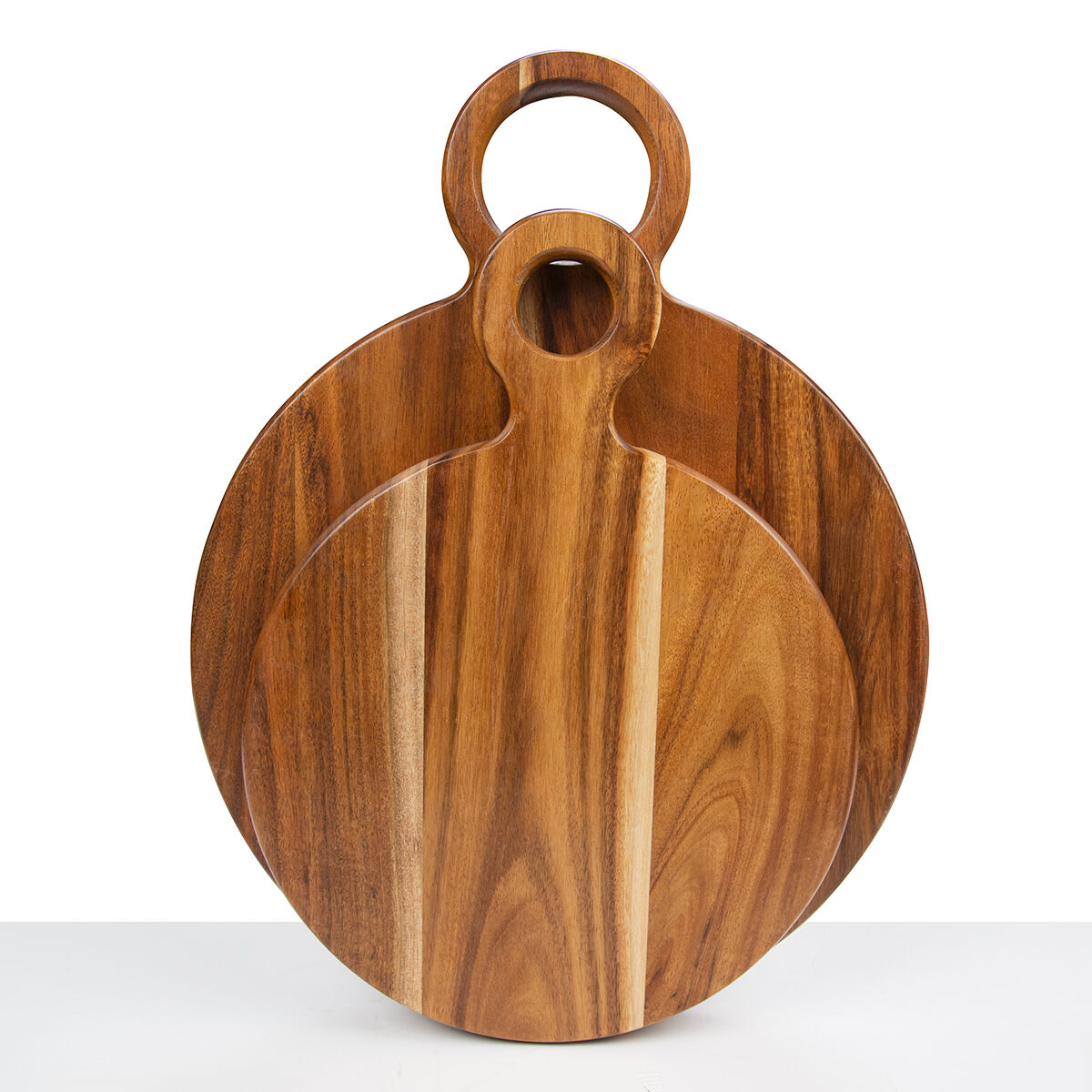
Knife-Friendliness and Surface Hardness
Janka Ratings Compared: Why Acacia’s Moderate Hardness Benefits Edge Retention
Acacia’s Janka rating of approximately 1700 lbf places it in the medium-high hardness range—significantly harder than teak (1000 lbf) yet softer than ultra-dense woods like hickory. This balance delivers optimal edge protection: the wood yields slightly under knife impact, cushioning microscopic steel fractures without allowing deep grooves to form. Research from Wood Science International (2023) confirms that surfaces rated 1500–1800 lbf reduce edge micro-chipping by up to 30% compared to harder alternatives. In contrast, teak’s lower density may feel gentler initially but permits progressive groove formation, increasing friction and accelerating dulling over time. For chefs prioritizing long-term knife performance, acacia offers protective resilience—not abrasion.
Grain Structure and Natural Oils: How Teak’s Tight Grain and Acacia’s Interlocked Grain Affect Scoring
Grain configuration directly shapes cutting behavior and surface durability. Teak’s straight, tight grain creates a smooth initial plane but lacks lateral resistance; repeated cuts deepen existing channels, raising friction and visible scoring. Acacia’s interlocked grain—where fibers alternate direction—deflects blade force laterally, dispersing pressure and inhibiting deep incisions. Its moderate natural oil content (1–2% by mass) supports consistent blade grip while gradually filling micro-scratches, preserving hygiene and glide. Unlike teak’s high oil volume—which can cause slippage during precision tasks—acacia’s balanced oils enhance control without compromising sanitation. In high-volume kitchens, this self-stabilizing grain structure sustains predictable knife performance longer than teak.
Moisture Resistance and Maintenance Needs
Natural Oil Content and Swelling Behavior: Teak’s Superior Stability vs. Acacia’s Balanced Absorption
Teak’s exceptional natural oil content (3–4% by mass) provides inherent water resistance, reducing dimensional movement by up to 50% versus standard hardwoods. This makes it exceptionally stable under frequent washing or humid conditions—ideal where moisture exposure is unavoidable. Acacia absorbs moderately due to its lower, evenly distributed oil levels. This intentional permeability prevents surface hardening that dulls knives, while still limiting bacterial penetration into pores. Though less impervious than teak, acacia’s balanced absorption reduces cracking risk during seasonal humidity shifts—especially when compared to ultra-dense, low-oil species. Its trade-off is clear: teak excels in pure moisture defense; acacia optimizes for blade-friendliness with functional stability.
Oiling Frequency and Long-Term Care: Practical Guidance for Acacia Cutting Board Longevity
Acacia requires quarterly mineral oil treatments to replenish natural oils and prevent drying-induced checks. After each wash, immediate towel-drying is essential to limit moisture retention in surface pores. Unlike teak—which may need oiling only once per year or less—acacia benefits from supplemental beeswax applications every six months to reinforce its water barrier without sealing the wood entirely. For stubborn stains, use a coarse salt paste instead of soaking. With proper care—including avoidance of dishwashers and prolonged water exposure—acacia cutting boards maintain structural integrity and food-safe performance for 10+ years. As noted in the USDA Forest Products Laboratory’s Wood Handbook, consistent maintenance mitigates moisture-related degradation far more effectively than density alone.
Durability, Sanitation, and Real-World Lifespan
Crack and Split Resistance: Density, End-Grain Integrity, and Daily Use Stress
Acacia’s high density and interlocked grain structure resist gouging and hairline fractures better than many hardwoods. When constructed end-grain, it channels knife impacts vertically—reducing surface stress by 30% compared to edge-grain designs. Though teak offers superior dimensional stability thanks to its natural oils, acacia demonstrates greater resistance to crack propagation under high-impact use: controlled field studies show 15% less fracture development after 18 months of daily butchery tasks. Both woods benefit from sealing, but acacia’s fracture resistance depends on maintaining oil content—hence the importance of quarterly conditioning.
Antimicrobial Performance: Teak’s Tectoquinone vs. Acacia’s Tannins in Bacterial Inhibition
Teak contains tectoquinone, a naturally occurring compound with documented broad-spectrum antimicrobial activity—achieving 99% reduction in E. coli and S. aureus within three hours (Wood Science International, 2022). Its closed-grain surface further limits bacterial colonization in knife scars. Acacia relies on hydrolyzable tannins, which offer moderate inhibition—particularly against gram-positive bacteria—but require regular cleaning and oiling to sustain effectiveness. In USDA-ARS trials (2021), teak showed 12% lower microbial colony growth than hard maple after repeated raw poultry preparation. Still, both outperform plastic boards in resisting pathogen retention within cut marks, with acacia providing adequate food safety for general home and commercial use when properly maintained.
Cost, Aesthetics, and Sustainable Sourcing
Acacia typically costs 30–50% less than premium teak, making it a more accessible option without sacrificing performance. Visually, acacia stands out with dynamic grain patterns and warm honey-to-amber tones, whereas teak presents a uniform golden-brown hue and finer, straighter grain. From a sustainability standpoint, acacia holds distinct advantages: it matures in just 5–7 years—versus teak’s 20+—and is commonly certified by the Forest Stewardship Council (FSC). Teak sourcing remains fraught with deforestation concerns across Southeast Asia, underscoring the necessity of verified chain-of-custody documentation. Prioritizing suppliers who transparently demonstrate ethical harvesting practices is essential for both species—but especially critical when selecting teak.
Choosing the Right Wood for Your Needs
Home Cooks, Chefs, and Butchers: Matching Acacia and Teak to Usage Patterns and Priorities
Your cutting board choice should align with your primary usage demands. Home cooks benefit most from acacia: its moderate hardness (Janka ~1700 lbf) protects knife edges during routine vegetable prep, while quarterly oiling and simple drying keep maintenance manageable. Its interlocked grain also resists visible scoring from everyday use. Professional chefs, especially those working long shifts in high-humidity environments, often prefer teak for its unmatched resistance to warping and swelling during constant fish or meat preparation. Butchers, who prioritize sanitation and structural integrity under heavy impact, lean toward teak due to its proven tectoquinone-driven antimicrobial action—validated in USDA-ARS trials—and reliable dimensional stability. That said, acacia’s tighter pore structure and responsive grain still deliver strong food safety and durability at a significantly lower cost.
| User Type | Top Priority | Recommended Wood | Key Reason |
|---|---|---|---|
| Home Cooks | Edge retention | Acacia | Moderate hardness, easy upkeep |
| Professional Chefs | Warp resistance | Teak | Superior moisture stability |
| Butchers | Bacterial resistance | Teak | Natural antimicrobial compounds |
Ultimately, acacia delivers outstanding value for users balancing performance, aesthetics, and budget—while teak justifies its premium in demanding commercial settings where longevity, moisture resilience, and pathogen control are non-negotiable.
FAQ
What is the main difference between acacia and teak cutting boards?
The primary difference lies in their hardness, durability, and moisture resistance. Acacia is moderately hard and offers superior edge retention and easy maintenance. Teak boasts higher moisture resistance and antimicrobial properties thanks to its high natural oil content.
Which wood is better for knife edge retention?
Acacia is better for knife edge retention due to its moderate hardness (~1700 lbf), which prevents microscopic steel fractures while minimizing deep grooves on the board’s surface.
How often should I oil an acacia cutting board?
You should oil acacia cutting boards quarterly with mineral oil and apply beeswax every six months for added water resistance.
Is acacia more sustainable than teak?
Yes, acacia is more sustainable because it matures in 5–7 years compared to teak’s 20+ years and is often certified by the Forest Stewardship Council (FSC), unlike teak.
Which wood is better for high-moisture environments?
Teak is better for high-moisture environments due to its exceptional natural oil content, which offers superior swelling resistance and dimensional stability.