 EN
EN

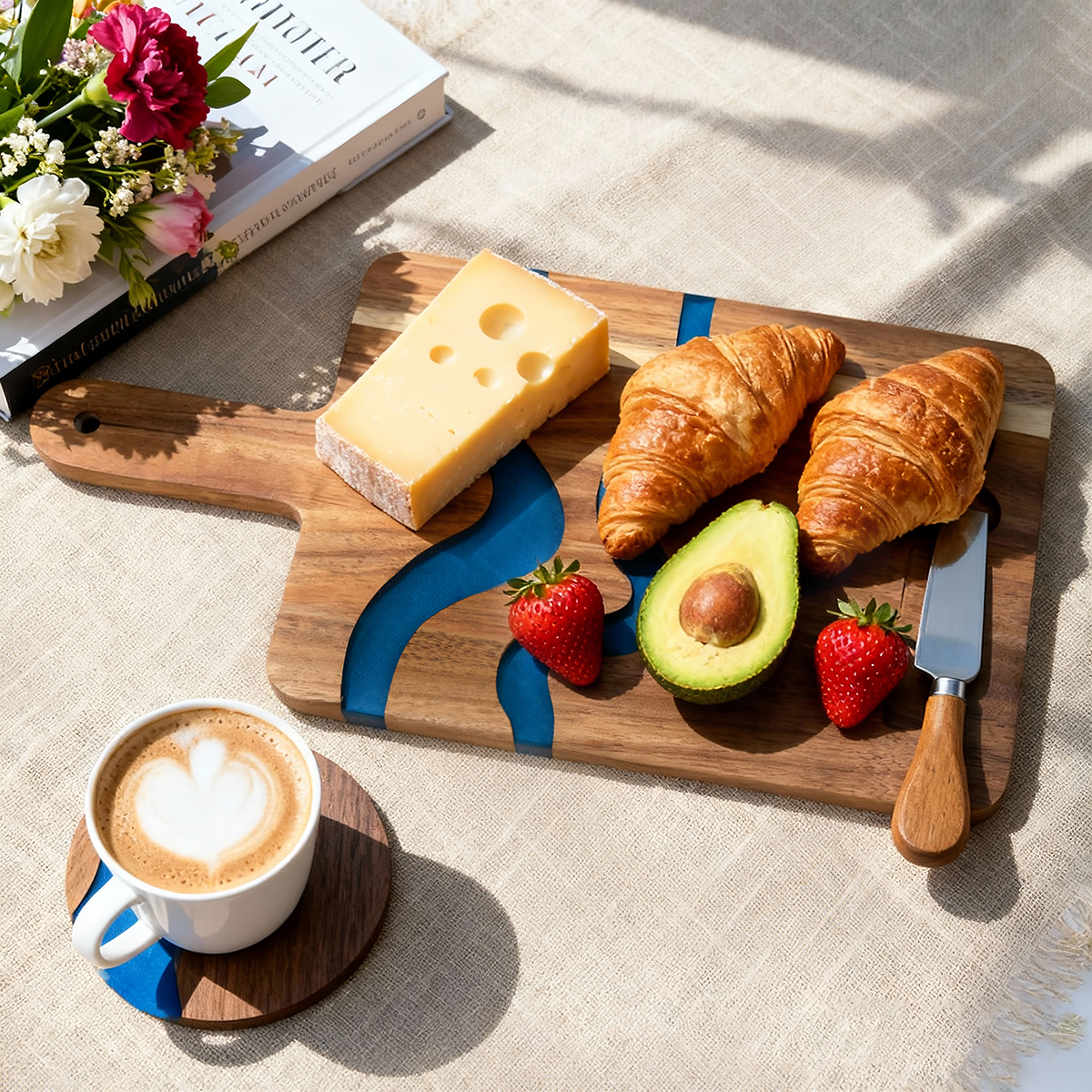
Understanding Wood Charcuterie Board Durability in Outdoor Conditions
How Moisture and Temperature Changes Cause Warping and Cracking
Charcuterie boards made from wood tend to soak up moisture from the air around them, which makes the fibers swell up. When they dry quickly, say from sitting near a heater or getting hit by sunlight, the wood shrinks unevenly. Over time, all these expansions and contractions create internal stress inside the board. This happens more with end grain boards since their pores are more open and let moisture in and out faster. Big temperature changes throughout the day, maybe 15 degrees Celsius difference or even more, really make things worse for the wood structure. Eventually, tiny cracks start forming as the material gets pushed past what it can handle. Anyone who leaves their wooden board outside at night will probably notice it starts to warp badly after just a few weeks.
Hardwoods vs. Softwoods: Which Wood Types Withstand Sun and Humidity Best?
Hardwoods such as teak (with a Janka rating of around 1,070 lbf) and acacia (rated at approximately 2,300 lbf) hold up much better outdoors than most softwoods do. The reason? These dense woods have tighter cells that actually cut down on water uptake by roughly 40 percent when compared to something like pine which soaks things up quickly. All woods will fade under sunlight eventually, but teak contains natural oils that help it handle moisture changes reasonably well. Maple stands out too because of its fine, even grain pattern that makes cracks less likely to form. Bamboo is interesting case study here since technically speaking it's not really a tree at all but rather a type of grass. It expands about 30% less than oak does when temperatures fluctuate, yet over time prolonged exposure to direct sunlight tends to make bamboo become quite brittle.
| Wood Type | Humidity Resistance | UV Tolerance | Crack Risk |
|---|---|---|---|
| Teak | High | Moderate | Low |
| Acacia | High | Low | Medium |
| Maple | Medium | Low | Very Low |
| Pine | Very Low | Very Low | High |
Why 'Food-Safe' Finishes Aren't Enough for Outdoor Weather Resistance
Food safe finishes like mineral oil and beeswax tend to disappear pretty quickly after only about two or three uses outside. Sunlight actually starts breaking apart those chemical bonds in the oils, and water from rain or morning dew creates tiny channels that let moisture sink deeper into the wood over time. Marine varnishes have something these don't though they contain UV protection agents and special chemical linkages that make them stick around longer. Without those protective qualities, regular food grade treatments leave the wood vulnerable to damage. Outdoor cutting boards finished this way need maintenance roughly three times as much when used outside compared to inside spaces. Even with all that care, small cracks still form on surfaces where germs can hide and multiply without anyone noticing until it's too late.
Food Safety Risks of Using Wood Charcuterie Boards Outside
Bacterial Growth in Micro-Cracks Due to Sun, Dust, and Insect Exposure
Changes in temperature and humidity really take a toll on wooden surfaces, especially those that get constant use or aren't properly maintained. What happens is these tiny cracks form over time, and they become little traps for leftover food bits and dampness. Dust bunnies and insects don't help either since they bring all sorts of germs right into those tough spots nobody can reach with a cloth. Studies indicate that wood with cracks actually holds about three times the bacteria compared to smooth surfaces. The combination of food residue sticking around plus the moisture in the air creates perfect breeding grounds for nasties like Salmonella and E. coli. Things get even worse when people serve things like cheese boards or cold cuts directly on the wood without putting down something protective like parchment paper or a nice slate tray underneath.
UV Damage to Finishes and Its Effect on Pathogen Resistance
Exposure to UV light breaks down food safe sealants over time through chemical reactions, which can make wood surfaces significantly more porous - some tests show porosity increases around 40%. When this happens, it weakens the natural defenses against microbes in the wood itself while also making those tiny surface grooves bigger places where bad bacteria can hide. Research has found that when these protective coatings start to fail, cleaning becomes much less effective. In fact, one study showed sanitization works only about 40% as well on damaged surfaces. That means dangerous stuff like Listeria gets pushed deeper into the wood grain instead of staying on the surface where it could be wiped away. What's worse, the rougher texture makes it really hard to clean properly even when all the obvious dirt seems gone, leaving behind hidden contamination spots that pose serious food safety risks.
Best Practices for Limited, Safe Outdoor Use of Wood Charcuterie Boards
The 90-Minute Rule: Minimizing Exposure While Serving Outdoors
Limit wood charcuterie board exposure to outdoor elements—sun, humidity, and temperature shifts—to no more than 90 minutes. This window helps prevent moisture-driven warping and curbs bacterial colonization in developing micro-cracks. After serving, immediately:
- Wipe away all food residues
- Clean with a mild vinegar solution (1:3 vinegar-to-water ratio)
- Air-dry vertically in full shade—not on a damp surface or in direct sun
- Recondition with food-grade mineral oil or board-specific conditioner once fully dry, indoors
Prolonged outdoor use accelerates UV damage to finishes and undermines both structural integrity and food safety. Adhering strictly to this timeframe—and following prompt, consistent post-use care—preserves your board’s longevity and protects guests during al fresco entertaining.
FAQ
How can I minimize the risk of my wood charcuterie board cracking when used outdoors?
Limit outdoor exposure to 90 minutes, avoid direct sunlight, and recondition with food-grade mineral oil after cleaning.
Which wood types are most suitable for outdoor charcuterie boards?
Hardwoods like teak and acacia are more resistant to humidity and UV damage due to their dense, tight cellular structure.
Can food-safe finishes adequately protect my board when used outside?
No, food-safe finishes like mineral oil are quickly broken down by sunlight and moisture, unlike marine varnishes with UV protection.
How should I clean my board after outdoor use?
Wipe off residues, clean with a 1:3 vinegar-to-water solution, and air-dry in the shade.