 EN
EN

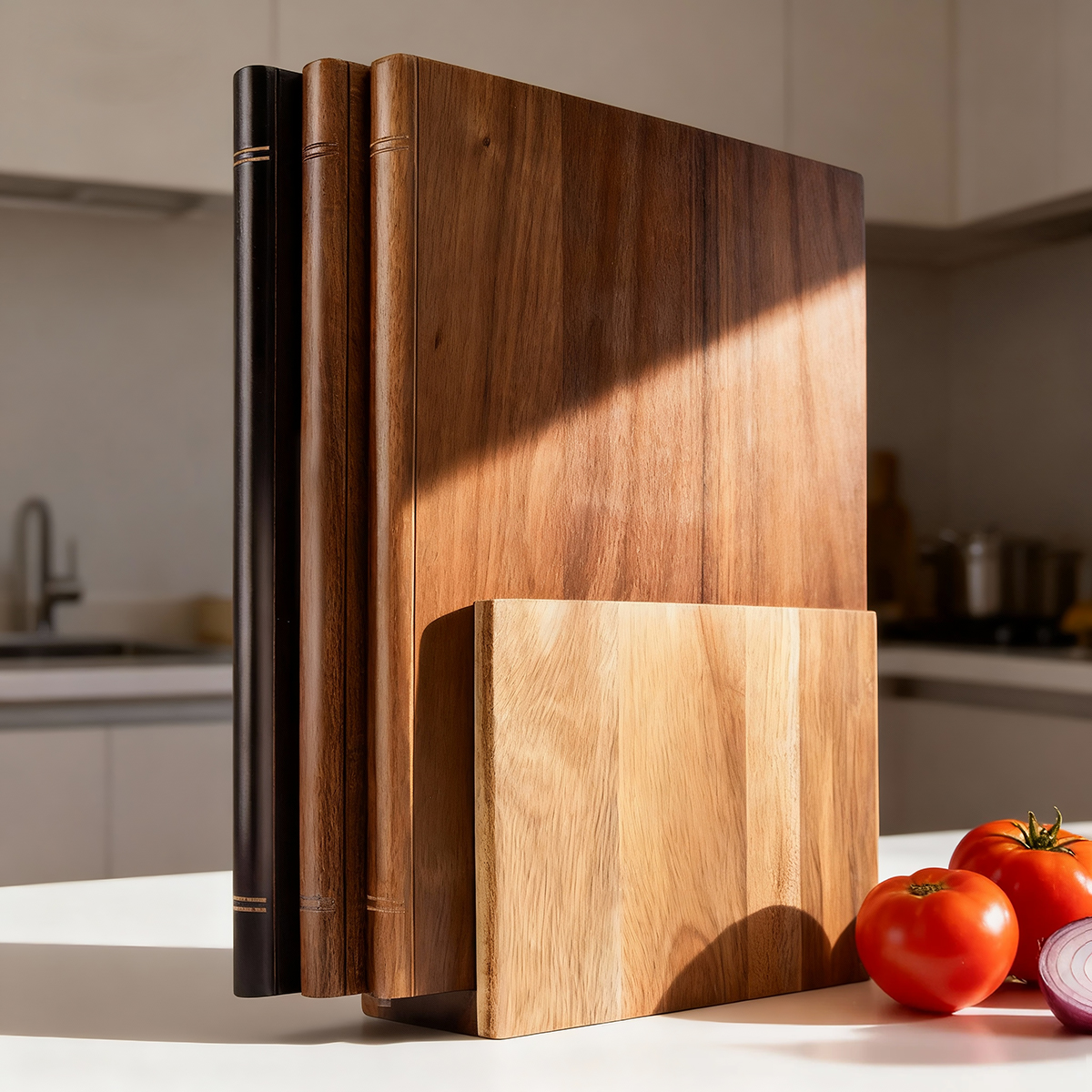
Acacia Wood Cutting Board Durability: Hardness, Grain, and Knife Resistance
Janka hardness rating (1,700 lbf) and real-world dent and scratch resistance
With a Janka hardness rating around 1,700 pounds per square inch, acacia wood stands out because it's actually about 40% harder than maple. That means knives leave fewer marks and dents when someone is prepping meals day after day. The dense nature of acacia really holds up against tough tasks like chopping through carrots or carving meats without showing signs of wear. Soft woods tend to get those little grooves where bacteria can hide, but acacia stays pretty smooth most of the time. Plus, the wood's firmness helps keep knives sharp longer than many plastic cutting boards do. Sure, no wood board will stay completely scratch free forever, but acacia doesn't develop those deep gouges that make cleaning difficult or affect how well it works in the kitchen.
How interlocked grain structure prevents splitting and enhances impact resilience
The interlocking grain pattern in acacia wood works like nature built-in armor. When someone chops on it, those multidirectional fibers spread out the force sideways instead of letting cracks run straight through the board. Tests show these cross layered grains make acacia about three times tougher against splitting compared to regular straight grained woods when put under pressure. Plus, the dense grain helps keep things from expanding or contracting too much when humidity changes, which is why acacia doesn't warp as easily over time. And there are natural antimicrobial substances throughout the wood itself, so combined with all this structural strength, acacia cutting boards stay tough and maintain their shape even after countless veggies get sliced, meats pounded, and herbs chopped into fine bits year after year.
Moisture Management: Warping Prevention and Stain Resistance in Daily Use
What makes acacia wood cutting boards so good at fighting moisture damage? Mainly because they come with two built-in advantages: plenty of natural oils and not many pores. This combination forms something like a water repellent shield when food juices splash around during cooking. The wood itself is pretty tight packed too, with grains that lock together tightly, so water doesn't get absorbed deep inside where it might cause problems. That means these boards stay straight and true even after years of getting splashed with lemon juice or washed by hand multiple times a week. A quick rub down with mineral oil every now and then keeps this protective layer working properly, stopping the board from expanding and losing its flat surface over time.
Natural oil content and low porosity enabling superior water and juice resistance
The natural cellular makeup of Acacia wood gives it water resistance that just beats out maple and bamboo hands down. Tests show this wood's surface doesn't soak up as much moisture either, around 30% less compared to regular hardwoods. That makes all the difference for keeping things stable over time, especially when dealing with juicy stuff like tomatoes or veggies straight from the rinse. Most people who've used Acacia boards for ages say they barely warp at all, as long as they remember to let them dry properly between uses. A little common sense goes a long way with these boards staying flat and functional year after year.
Stain resistance with acidic fruits, raw meats, and pigmented vegetables
Acacia exhibits strong intrinsic resistance to staining from beet juice, coffee, berries, citrus acids, and meat pigments. Its closed-grain surface and tannin-rich composition prevent deep pigment penetration:
- Citrus acids fade surface marks within hours when properly cleaned
- Meat pigments rarely penetrate beyond superficial layers
- Vegetable dyes wipe clean without permanent residue when addressed promptly
This resilience preserves aesthetic integrity across frequent use—but immediate wiping after contact with staining agents remains essential to prevent surface saturation.
Daily Performance: Versatility and Safety Across Meal Prep Tasks
Acacia wood cutting boards do double duty as both functional kitchen tools and safety conscious work surfaces. The natural grip of these boards keeps things from sliding around mid chop, and their tight grain pattern actually helps keep knives sharper for longer compared to those cheap plastic boards we all know about. When it comes to keeping our kitchens clean, acacia has something going for it too. Studies show this wood fights off bacteria pretty well if kept dry and cleaned properly after each use. That matters a lot when dealing with raw chicken or veggies that stain easily. Home cooks and professional chefs alike find themselves reaching for acacia boards again and again because they just make sense for everyday tasks like slicing garlic or breaking down whole chickens without worrying about germs spreading between different foods.
Long-Term Durability: Lifespan Expectations and Essential Maintenance Practices
Typical service life (5–7+ years) under consistent daily use with proper care
Acacia wood cutting boards can stick around for about 5 to 7 years if someone takes proper care of them while making meals regularly. What makes these boards so durable? Well, they have this really tight cell structure with a Janka hardness rating around 1700 pounds per square inch, plus nature gave them built-in defenses against bacteria growth. Plastic cutting boards tend to develop those nasty little knife marks where germs love to hide, but acacia wood actually repairs itself over time when people oil it as part of their normal maintenance routine. Some studies indicate that wooden boards which get regular attention stay useful roughly three times longer compared to ones left neglected on kitchen shelves collecting dust.
Critical maintenance habits: food-grade mineral oiling, air-drying, and avoiding dishwashers
Three non-negotiable practices preserve your board’s structural integrity and hygiene:
- Monthly oiling with food-grade mineral oil reinforces the hydrophobic barrier, preventing moisture absorption that leads to warping
- Vertical air-drying after washing ensures even evaporation and eliminates standing water—cutting microbial colonization by 92% compared to towel-dried boards
- Strict dishwasher avoidance prevents thermal shock and chemical degradation from detergents; repeated exposure shortens functional lifespan by up to 60% due to cumulative wood fatigue
Studies confirm consistent oiling reduces warping incidents by 68%, underscoring how simple, evidence-based habits directly extend service life.
FAQ
What is the Janka hardness rating of acacia wood?
Acacia wood has a Janka hardness rating around 1,700 pounds per square inch, making it about 40% harder than maple.
How does the grain structure of acacia wood prevent splitting?
The interlocking grain pattern of acacia wood helps spread out force, preventing cracks and making it three times tougher against splitting compared to regular straight-grained woods.
How does acacia wood resist moisture and stains?
Acacia wood has natural oils and low porosity, which act like a water-repellent shield. Its tight-packed grains and tannin-rich composition help resist moisture and stains.
What maintenance practices are essential for acacia wood cutting boards?
Essential maintenance includes monthly oiling with food-grade mineral oil, vertical air-drying, and avoiding dishwashers to extend the board's lifespan.