 EN
EN

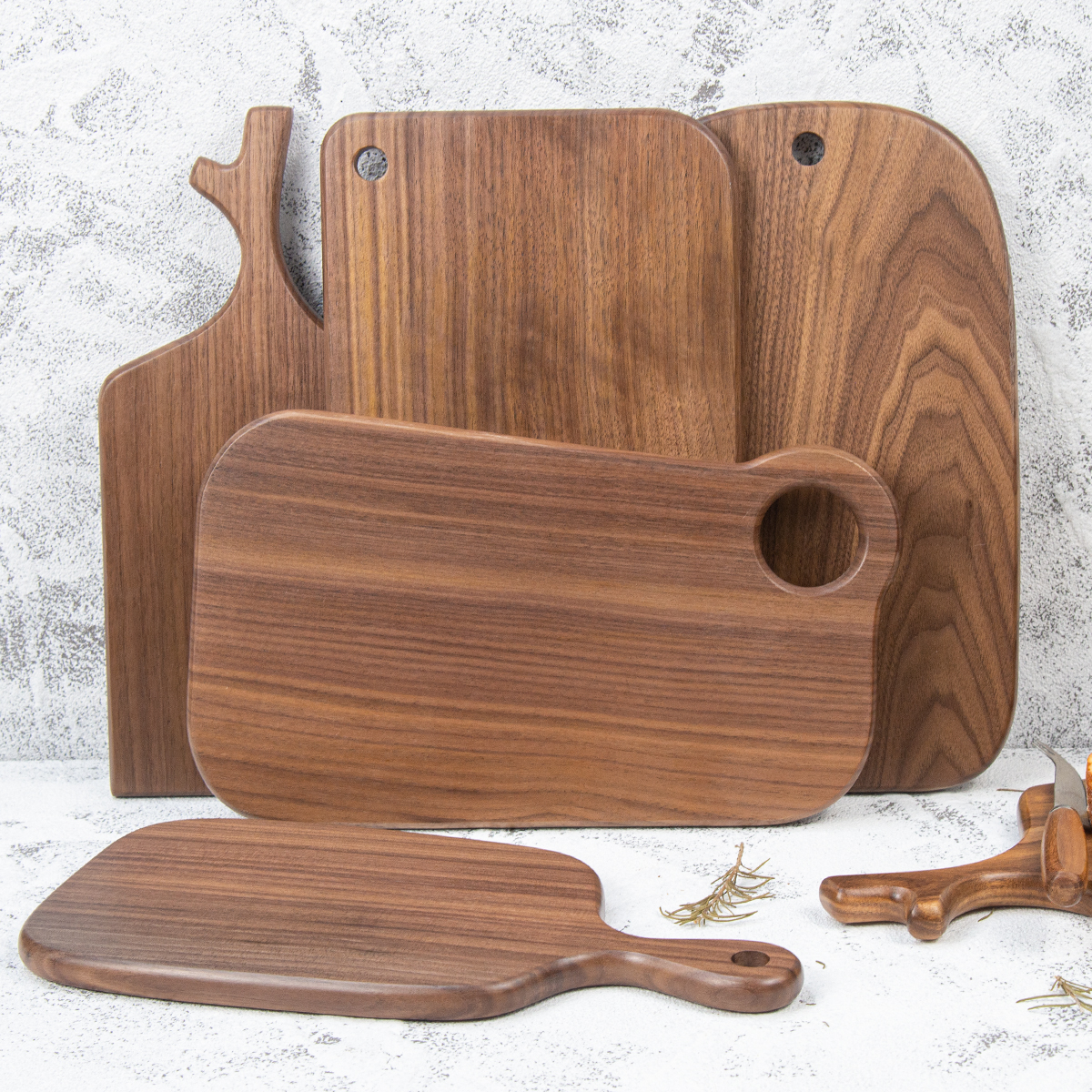
Understanding the Natural Characteristics of Walnut Wood
Moisture content and dimensional stability in walnut cutting boards
Walnut wood has just the right balance of density and those tight grain patterns that make it pretty stable dimensionally. That means it doesn't warp nearly as much as softer woods such as pine or basswood when exposed to normal kitchen conditions. Most experts recommend keeping finished walnut cutting boards around 6 to 8 percent moisture content for best results. Maintaining this level helps the board hold together better since it won't soak up water too quickly, which matters a lot if someone is washing it frequently. The problem comes when manufacturers don't dry the wood properly in their kilns or when boards sit in water for too long. This creates stress inside the wood that can lead to those annoying little cracks over time. Want to keep your board looking good? Definitely skip putting it in the dishwasher. When cleaning, just give it a quick rinse with warm water instead of letting it soak. After washing, dry everything off right away with a clean towel. Then prop the board upright somewhere where air can circulate around all sides so no damp spots get trapped.
How temperature and humidity affect walnut wood performance
Walnut wood reacts pretty predictably to changes in the environment but does so with sensitivity. It tends to swell when there's lots of moisture in the air and shrink when things get dry. According to studies done at the USDA Forest Products Lab, hardwoods including walnut expand about 0.3% radially for each 10% jump in humidity levels. That might not sound like much, but over time it can lead to warped edges or cracks on surfaces. Keep wood away from appliances like ovens, dishwashers, or heating ducts since these spots see temperature swings exceeding 10 degrees Fahrenheit daily. For folks living in places where humidity stays above 60%, putting silica gel packets inside sealed storage containers really helps maintain stable conditions. Winter brings another challenge though. When indoor air gets below 35% humidity, applying oil once a month becomes necessary to replace what the wood loses naturally and prevent tiny fractures forming along the grain lines.
Preventing Warping, Cracking, and Other Common Damage
Causes of cracking in walnut cutting boards and how to avoid them
Cracking arises primarily from rapid moisture loss or abrupt temperature shifts, which cause uneven fiber contraction. When ambient humidity falls below 40%, internal stress builds within the wood matrix, increasing susceptibility to surface and end-grain fractures (Woodworkers Guild, 2023). Prevention hinges on environmental control and consistent maintenance:
- Maintain storage-area humidity between 40–60%
- Never soak boards or place them in dishwashers
- Apply food-grade mineral oil monthly to seal surface pores and slow evaporation
Immediate drying after washing is equally vital—water left to penetrate deep into the grain evaporates unevenly, generating microfractures invisible to the naked eye but damaging to long-term integrity.
Best practices to prevent warping due to uneven drying or exposure
Warping occurs when one side of the board absorbs or loses moisture faster than the other, resulting in asymmetric expansion or contraction. The most effective countermeasures are simple, repeatable habits:
| Prevention Method | Effect | Frequency |
|---|---|---|
| Dual-side drying | Equalizes moisture release across both faces | After every wash |
| Rotational use | Distributes wear and moisture exposure evenly | Weekly |
| Vertical storage | Eliminates bottom-side dampness and promotes full-surface airflow | Permanent |
Always dry boards upright on rack edges—not flat on countertops—to avoid moisture pooling. Thermal shock from hot cookware accelerates deformation; always use trivets. Seasonal humidity swings demand responsive care: perform the water-beading test monthly, and increase oiling frequency when indoor humidity drops below 40%.
Daily Cleaning and Drying Techniques for Longevity
Consistent, thoughtful cleaning and drying directly determine your walnut cutting board’s functional lifespan and aesthetic longevity. These routines not only inhibit bacterial growth but also preserve the wood’s natural resilience and rich tonal depth.
Safe and effective cleaning methods for walnut cutting board surfaces
Get rid of leftover bits right away with a good old bench scraper. When washing, go easy on it with warm water and some gentle dish soap, and definitely stick to a soft bristled brush for scrubbing. Stay away from those abrasive pads or anything that scrapes hard since they just ruin the wood. Don't let the cutting board soak in water either because walnut has these tiny holes in its grain that soak up moisture like a sponge, which leads to warping and all sorts of weird shapes. To clean really well, spray down with a mix of three parts water to one part vinegar, then rinse off quickly and pat dry with a towel. Bleach and strong chemicals are out of the question though. They strip away the natural oils that protect the wood and actually create little hiding spots for germs in the surface grooves. Some serious research in the Journal of Food Protection shows that when taken care of properly, wooden boards end up with almost 100% less bacteria compared to plastic ones after about a year of normal kitchen action.
Proper drying practices to minimize moisture absorption
Getting everything dry properly matters a lot. Right after cleaning, grab a lint free cloth and gently press down on all areas following the wood grain direction. This helps pull away excess water instead of pushing it further in. Next step? Stand the board up straight somewhere airy but not near heat sources like stoves or radiators, and definitely keep it out of direct sun. Let air circulate freely around both sides of the board. Most times it'll take around 2 to 4 hours for complete drying. To check if ready, run a hand flat over the surface. If it feels cool or sticky in spots, there's still moisture lingering inside. When living in places where humidity stays above 60% most days, think about getting a dehumidifier for the kitchen or wherever boards are stored. Remember to always keep them standing upright rather than laying flat. Flat storage traps moisture which can lead to condensation forming and eventually mold growing over time.
Seasoning and Re-Oiling: Maintaining the Protective Oil Finish
Best oils and application techniques for walnut cutting boards
Most professionals still go with food grade mineral oil when it comes to caring for walnut cutting boards. What makes this stuff work so well? Well, it doesn't have any smell, won't go bad, and seeps right into the wood without changing color. To get the best results, grab a clean cloth free of lint and rub the oil onto the board following the wood grain direction. Let it soak in for around four to six hours first, then wipe off what's left on top. This helps keep things from getting gummy and maintains good airflow through the wood. For regular maintenance, once a month should do unless living somewhere really dry calls for more frequent applications. Stay away from those plant based oils like olive or canola though. These tend to go through chemical changes over time, leaving behind sticky films that not only look bad but actually hurt the wood's condition and create hygiene issues down the road.
How to perform the water-beading test to identify when re-oiling is needed
Want to check if your wooden board still has good protection? Try the water bead test. Just put about 5 to 7 drops of regular temperature water across various spots on the surface including the middle area, sides, and those tricky end grain sections. When properly oiled, water forms nice tight beads similar to mercury that stay intact for around 5 minutes or so. But watch out if the drops start flattening out, spreading across the wood, or getting absorbed within just 1 or 2 minutes. That means the protective coating has worn down and it's time to apply fresh oil. Craftsmen who work with wood all day long recommend this simple check, along with folks from the National Wood Flooring Association. Doing this regularly stops moisture problems before they cause damage like warping or cracks. Most people find doing this once a month works fine, though during cold winter months when air gets really dry inside homes, checking every other week makes sense since wood loses moisture much faster then.
FAQ
What is the ideal humidity level for storing walnut cutting boards?
The ideal humidity level for storing walnut cutting boards is between 40–60%.
How often should I apply mineral oil to my walnut cutting board?
It is recommended to apply food-grade mineral oil to your walnut cutting board once a month or more frequently in dry climates.
Can walnut cutting boards be placed in the dishwasher?
No, walnut cutting boards should never be placed in the dishwasher as it can cause warping and cracking.
What is the water-beading test?
The water-beading test involves placing a few drops of water on the cutting board surface to check if the board needs re-oiling. If the water beads up, the board is adequately protected; if it absorbs quickly, it's time to re-oil.