 EN
EN

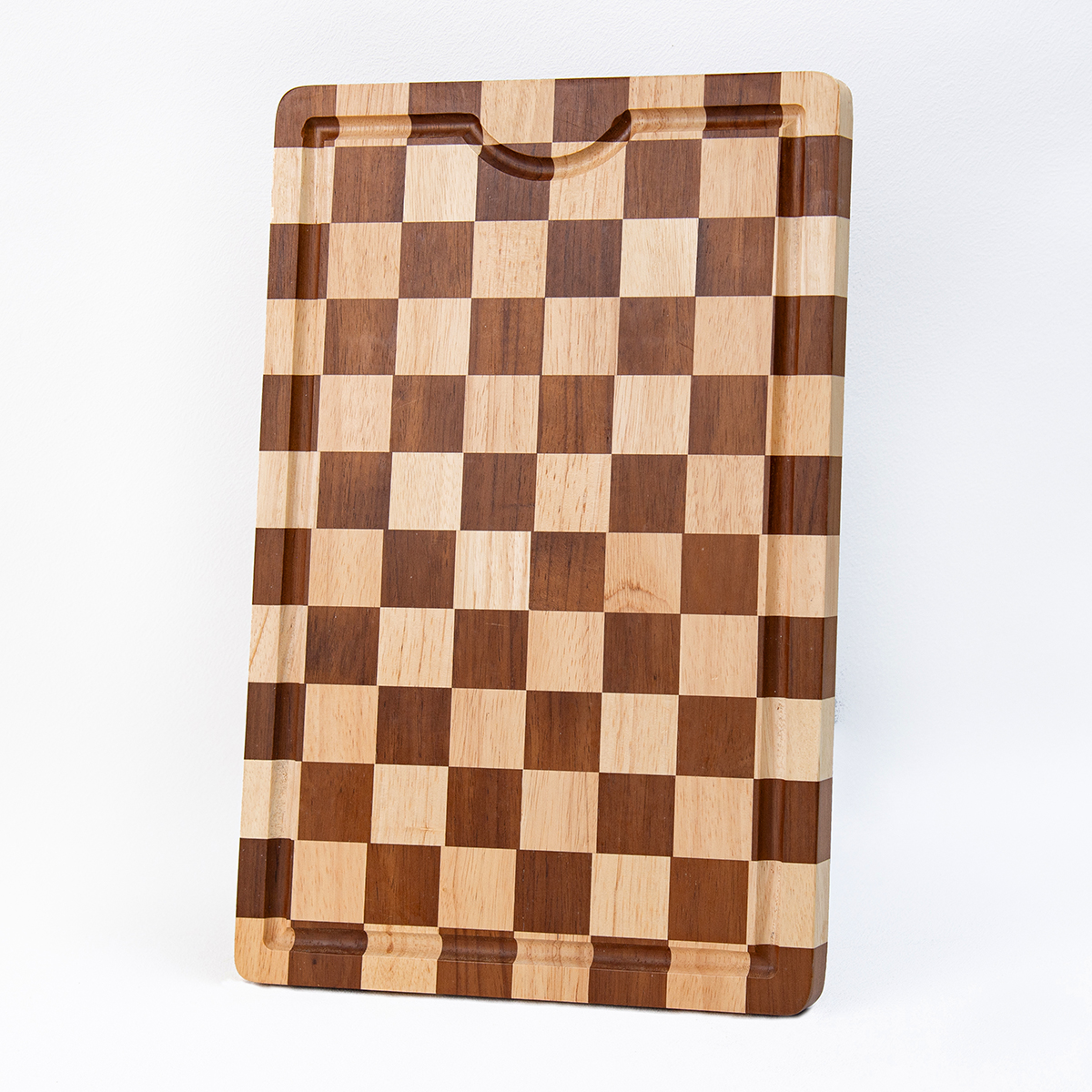
Why Surface Finishes Define the Lifespan of Commercial Wood Products
The Hidden Cost of Ignoring Finish Quality
A procurement manager for a mid-sized restaurant group places an order for 300 serving trays. The supplier's sample looked attractive — rich natural wood grain, smooth to the touch, a reasonable price point. Six months later, water rings have turned into dark stains. Cracks have formed along the grain lines. The operations manager has already flagged hygiene concerns. The entire batch needs replacement, and the total cost — reordering, shipping, downtime — far exceeds whatever was saved on the initial purchase.
A commercial-grade wood tray operates under conditions that home-use products never face. Restaurant servers handle each one dozens of times per shift. Hotel room service carts stack trays in humid conditions. Retail display fixtures sit under continuous lighting for months. Without a properly engineered surface finish, raw wood absorbs moisture, grease, and cleaning chemicals at rates that ensure rapid deterioration. The finish is not a cosmetic afterthought. It is the primary engineering barrier between the wood substrate and everything that shortens its service life. For hospitality and retail buyers, understanding wood tray finish technology is the first step toward avoiding repeat procurement failures.
What Happens When a Protective Coating Fails
The failure of a surface coating on a serving or display tray follows a predictable but destructive sequence. Wood is hygroscopic — it naturally takes up and releases moisture from the surrounding air. When a finish layer cracks, thins, or delaminates, moisture enters the wood fibers directly. The result is swelling, warping, and dimensional instability that no amount of drying can reverse. This damage pattern is especially severe for any wood tray used in humid kitchen environments or outdoor-adjacent dining areas where humidity fluctuates daily.
Beyond moisture, chemical exposure compounds the damage. Cleaning agents, food acids, oils, and sanitizing solutions penetrate exposed wood grain, leaving permanent discoloration that cannot be sanded away without removing significant material. In food service environments, those stained and cracked surfaces become microbial harbor points — a genuine health code liability. UV protection is another dimension: prolonged light exposure breaks down lignin in the wood structure and causes yellowing or graying that makes even structurally sound pieces look aged and unprofessional long before their mechanical failure point.
The Science Behind Commercial-Grade Wood Coatings
How Surface Finishes Bond to Wood and Resist Environmental Stress
A durable wood coating performs two distinct functions. Penetrating sealants soak into the wood's capillary structure — typically 0.5mm to 2mm deep — and cure inside the fiber walls, stabilizing dimensionally by partially filling the spaces where water would otherwise enter. Each sealant formulation works differently depending on the wood species and porosity. Film-forming topcoats, by contrast, sit above the wood surface as a continuous barrier layer, usually 50 to 150 microns thick. For a demanding commercial environment, this dual-layer approach provides the foundation for long-lasting wood coating protection.
High-performance polyurethane coatings achieve their durability through cross-linking polymerization. During curing, the liquid coating's molecular chains form a three-dimensional network of covalent bonds — essentially converting from a thermoplastic to a thermoset material. This network structure delivers hardness ratings of 2H to 4H on the pencil hardness scale, which translates directly to scratch resistance in daily handling. UV-cured acrylic finishes follow a different path: photoinitiators in the coating absorb ultraviolet energy and trigger rapid polymerization within seconds, producing an extremely hard, clear film with excellent chemical resistance. The choice between these systems depends on the specific commercial application — polyurethane for maximum toughness in high-contact environments, UV acrylic for production efficiency with good protective properties.
Three performance parameters determine how well a coated product survives in commercial settings. Moisture resistance is measured through water vapor transmission rate testing and immersion tests per ANSI/KCMA A161.1 standards — a high-quality finish should show no blistering, clouding, or adhesion loss after 24-hour water exposure. Heat resistance matters particularly for trays used in food service, where hot plates and heated serving vessels can create localized surface temperatures exceeding 80°C. A properly cured two-component coating maintains film integrity up to 120°C without softening or releasing volatile compounds.
Chemical resistance testing subjects finished panels to a range of substances — ethanol, citric acid, vegetable oil, alkaline cleaners — for specified contact periods. The finish should show no visible etching, softening, or color change. For hospitality buyers, this means a well-coated wood tray survives repeated contact with salad dressings, cocktail spills, and commercial sanitizing solutions without surface degradation. The standard reference for these evaluations is typically ISO 4211 or equivalent national standards for furniture surface testing.
Balancing Aesthetics with Functional Performance
The tension between visual appeal and protective performance creates real trade-offs in finish selection. High-gloss coatings reveal every scratch and fingerprint but offer the highest film density and surface hardness. Matte finishes hide wear more effectively but achieve their low-sheen appearance through silica-based flattening agents that slightly reduce film cohesion. For display and retail applications where appearance drives purchasing decisions, a satin or semi-gloss finish at 30–50 gloss units typically provides the best compromise — sufficient clarity to showcase wood grain while forgiving of minor handling marks.
Food-contact applications add a distinct regulatory layer. Finishes intended for trays that hold unwrapped food must comply with FDA 21 CFR 175.300 or EU Framework Regulation (EC) No 1935/2004, which restrict the types of resins, solvents, and additives that can be used. The good news is that modern food-safe polyurethane and acrylic formulations now achieve durability levels comparable to industrial-only coatings, removing the historical trade-off between safety and longevity.
Real-World Applications, Procurement, and Maintenance
A Hotel Chain's Operational Improvement After Switching Finish Systems
A boutique hotel group operating fourteen properties across Thailand and Vietnam faced a recurring procurement headache. Their guest room dining trays — solid acacia wood with a single-coat lacquer finish — were being replaced every four to six months. The primary failure mode was water staining from condensation on cold beverage glasses, followed by cracking along end-grain sections where moisture ingress was highest. Each replacement cycle cost the group approximately $12,000 across all properties, not counting the operational disruption of inconsistent tray availability.
The procurement team switched to trays finished with a two-component polyurethane system: a penetrating epoxy sealer as the base layer, followed by two spray-applied polyurethane topcoats with combined film thickness of 120–140 microns. The sealer locked the wood fibers against moisture movement, while the topcoat layers provided the hardness and chemical resistance needed for daily room service handling. After eighteen months of continuous use, visual inspection showed no water staining, edge delamination, or surface cracking. The annual tray procurement expenditure dropped to under $4,000. Housekeeping staff reported that the trays cleaned faster and maintained a consistent appearance, reducing the time spent sorting and rotating worn pieces out of service.
Key Quality Indicators and Questions for Procurement Teams
Procurement teams evaluating coated wood products should request three specific test results from potential suppliers. Cross-hatch adhesion testing per ISO 2409 provides a quantitative measure of coating bond strength — a rating of 0 or 1 (on a 0–5 scale where 0 is best) indicates the finish will resist peeling under thermal cycling and mechanical stress. Taber abrasion resistance, measured as the number of cycles required to wear through a coating under a standardized abrasive wheel (typically CS-10 or CS-17), gives a direct proxy for how the surface holds up to repeated sliding contact. Accelerated UV aging tests — commonly 200–500 hours in a QUV chamber — predict color stability and coating integrity over years of indoor display use.
A complete supplier specification sheet should list the exact coating system by manufacturer product code, not generic descriptors like "polyurethane finish." The document should include dry film thickness per coat, curing method and schedule, and any relevant food-contact certifications if applicable. Suppliers that cannot produce a detailed finish specification are almost certainly outsourcing coating to third parties without consistent quality controls.
Before committing to a bulk purchase, a procurement team should confirm several details directly with the manufacturer. What is the specific finish system composition — sealer type, topcoat chemistry, number of coats, and total film thickness? What is the documented performance in a usage environment similar to the intended application? Is the coating repairable on-site with touch-up products, or does damage require returning pieces to the factory? Which cleaning products and sanitizers are compatible with the finish, and which will cause damage? Answers to these questions separate suppliers that understand commercial performance requirements from those simply selling wood products with a generic clear coat.
Daily Care, Inspection, and Refinishing Protocols
A high-performance finish significantly reduces maintenance effort, but proper care still determines long-term outcomes. Daily cleaning should use a soft microfiber cloth lightly dampened with warm water — never saturated, as standing water on any wooden surface eventually finds its way through microscopic coating defects. For sanitizing in food service environments, quaternary ammonium-based sanitizers at recommended dilution rates are generally compatible with cured polyurethane and acrylic finishes, but chlorine bleach solutions at any concentration will cause surface etching and should be avoided entirely.
A structured inspection routine prevents small finish issues from becoming full replacement events. High-use trays in hospitality settings benefit from monthly visual checks; display and retail trays can follow a quarterly cycle. The key inspection trigger is surface roughness — run a fingertip across the primary contact area after cleaning. If the surface feels textured rather than smooth, micro-scratching has begun compromising the finish layer. When scratches exceed approximately 0.5mm in depth or when water dropped on the surface spreads flat rather than beading up, the hydrophobic barrier has been breached and refinishing is needed.
Professional refinishing typically involves light scuff-sanding of the existing coating, cleaning, and applying one to two fresh topcoats with proper inter-coat adhesion. This process costs 30–50% of replacement and extends service life by another full cycle, making it the financially rational choice for quality pieces where the underlying wood structure remains sound.
Frequently Asked Questions
What is the most durable surface finish for a commercial wood tray?
Two-component polyurethane coatings deliver the highest durability for commercial applications, combining 2H–4H pencil hardness with strong moisture and chemical resistance. UV-cured acrylic finishes provide a near-equivalent alternative with faster curing times and excellent clarity. Both choices are valid depending on the specific usage environment and production requirements for a wood tray in daily commercial service.
How long does a professionally coated wood tray last in a commercial setting?
With a properly specified two-component finish and basic maintenance, a commercial-grade tray typically lasts 2–5 years in hospitality and retail environments, compared to 6–12 months for pieces with basic single-coat lacquer or no protective coating. Service life varies with daily handling frequency and the intensity of chemical exposure from cleaning routines.
Why do some tray finishes crack or peel within months of purchase?
Premature finish failure almost always traces to three root causes: inadequate surface preparation before coating application, use of single-component air-dry lacquer for applications that demand two-component chemically cured systems, or exposure to temperature swings that cause wood expansion exceeding the coating's elasticity limit.
Can a damaged surface be repaired without replacing the entire piece?
Most polyurethane and acrylic finishes support spot repair through light sanding and recoating of the affected area. Damage that penetrates through the coating into the wood substrate requires more extensive refinishing. Confirming repairability and touch-up product availability with the supplier before purchase eliminates unpleasant surprises later.
How do food-safe finishes differ from standard industrial coatings?
Food-safe formulations exclude heavy-metal driers, phthalate plasticizers, and solvents that could migrate into food upon contact. These products comply with FDA 21 CFR 175.300 or EU (EC) No 1935/2004 while delivering durability performance comparable to industrial-only coatings, making them suitable for serving applications without sacrificing longevity.
Which cleaning products damage protective wood coatings?
Chlorine bleach solutions, abrasive scouring powders, undiluted isopropyl alcohol, and ammonia-based glass cleaners chemically attack polyurethane and acrylic film structures on any finished wood tray surface. Even diluted bleach causes micro-etching that accumulates over repeated exposure. Quaternary ammonium sanitizers at standard dilution rates remain the safest option for disinfection needs.
When should a tray be taken out of circulation for refinishing?
Remove a piece from service when scratches exceed approximately 0.5mm depth, when the surface texture feels rough after cleaning, when water no longer beads on the surface indicating lost hydrophobic properties, or when visible discoloration appears in the wood beneath the coating — all signs that the protective barrier has been compromised.
Do matte and gloss finishes offer different durability on wooden serving products?
Gloss formulations achieve marginally higher surface hardness due to higher resin solids content, while matte finishes incorporate silica flattening agents that slightly reduce film density. In practice, the durability gap is narrow with quality manufacturer formulations. The practical choice depends more on scratch visibility — matte hides wear better — and the desired aesthetic presentation for the specific service environment.
Choosing a Reliable Production Partner
Manufacturing consistently finished commercial-grade products requires systematic engineering, not basic woodworking. A capable partner brings process control from raw timber moisture-content management through multi-stage finishing lines with controlled curing environments — temperature, humidity, and dwell time all documented and repeatable. For any buyer sourcing a high-volume wood tray order, verifying this level of process discipline separates suppliers that deliver batch-to-batch consistency from those producing unpredictable quality. Quality management systems should include batch-level cross-hatch adhesion testing, accelerated aging protocols, and complete finish specification sheets that list exact coating systems by manufacturer product code. A properly specified and manufactured wood tray, backed by documented process controls and finish certification, transforms from a disposable commodity into a durable asset that performs reliably across years of commercial service.
GREATSUN operates production workflows designed for export-grade consistency, supporting global supply chain requirements across hospitality, retail, and food service channels. The integration of in-house finishing facilities with upstream wood processing allows tighter oversight than operations that outsource surface treatment to third-party workshops. Procurement teams evaluating suppliers should verify whether the manufacturer maintains dedicated finishing lines with trained coating technicians and provides technical documentation including coating certificates and performance test data — these indicators separate industrial capability from commodity-level production.