 EN
EN

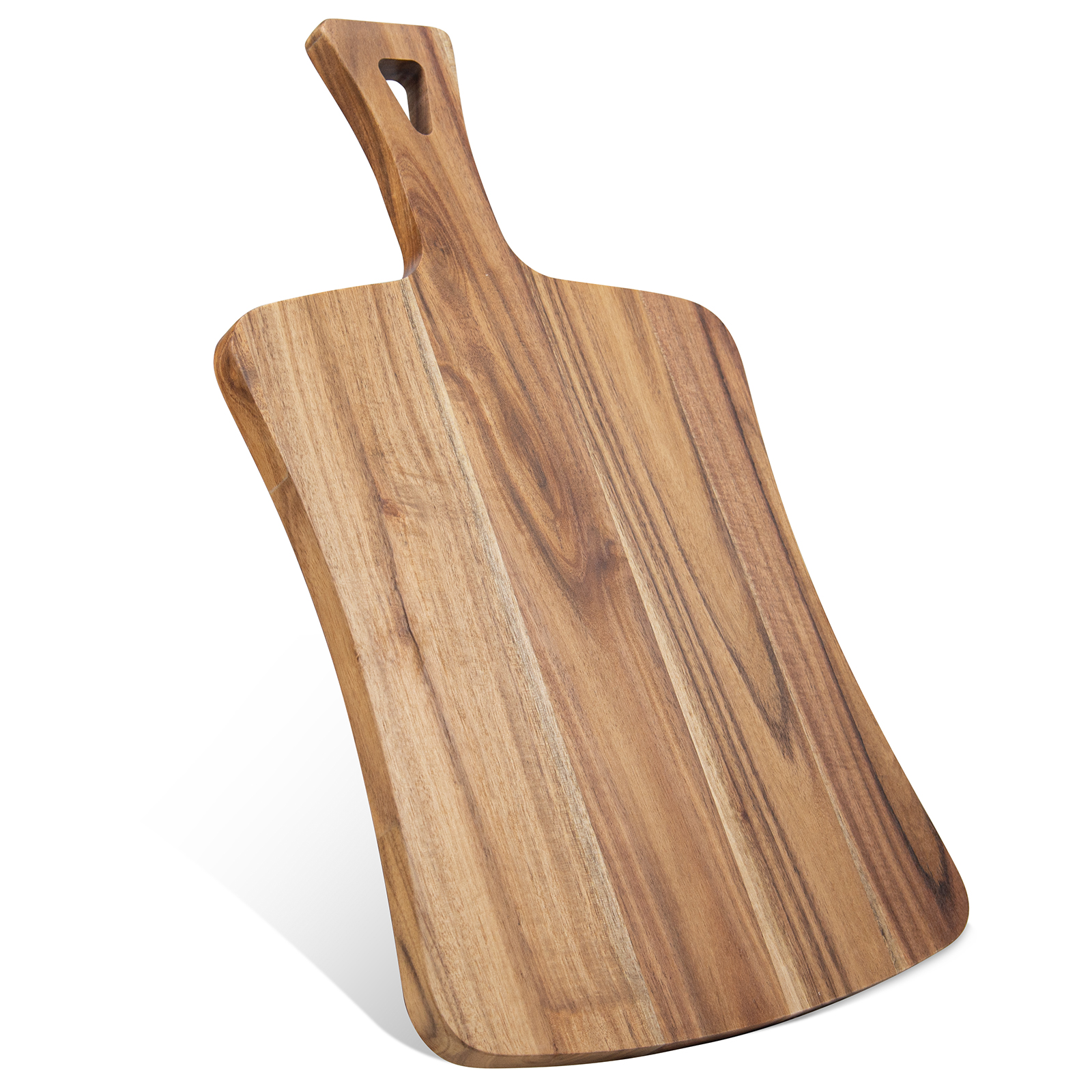
Root Causes of Warping and Cracking in Wood Cutting Boards
Moisture Imbalance: The Primary Driver of Dimensional Instability
Wood cutting boards warp and crack primarily due to uneven moisture absorption and release. As hygroscopic materials, wood fibers expand when absorbing water and contract during drying cycles. When one surface dries faster than the opposite side—common in commercial kitchens due to repeated washing and inconsistent drying—internal stresses develop, leading to cupping, bowing, or twisting. Boards left wet or stored improperly show 37% more warping incidents, according to 2023 woodworking industry data. Crucially, warping is not a superficial flaw but a structural response to moisture gradients penetrating deep into the cellular structure.
Wood Species, Grain Orientation, and Initial Moisture Content as Critical Risk Factors
Not all woods respond equally to moisture challenges. Dense hardwoods like maple exhibit greater dimensional stability than porous species such as oak, showing 23% less deformation in controlled tests. Grain orientation is equally decisive: quarter-sawn boards resist warping better than flat-sawn alternatives because their restrained radial movement limits uneven expansion and contraction. Most critically, boards manufactured with improper initial moisture content—above the ideal 8–12% equilibrium range—become unstable as they acclimate to commercial kitchen humidity. Excessive shrinkage during this adjustment creates internal tensions that manifest as cracks. Proper kiln-drying to target moisture levels is non-negotiable for professional-grade performance.
Effective Moisture Management for Stable Wood Cutting Boards
Air-Drying vs. Kiln-Drying: Balancing Internal Tension and Long-Term Stability
The choice between air-drying and kiln-drying directly affects internal tension—and therefore long-term flatness. Air-drying reduces moisture slowly over months, allowing gradual fiber stabilization. But for commercial use, kiln-drying is superior: it precisely targets a final moisture content of 6–8%, matching typical kitchen conditions and minimizing post-installation movement. This control prevents rapid moisture exchange after manufacturing, significantly reducing dimensional shifts.
| Drying Method | Process Time | Moisture Control | Risk of Internal Stress |
|---|---|---|---|
| Air-Drying | Months | Low | Moderate |
| Kiln-Drying | Weeks | High | Low |
Post-Use Drying Protocol: Why Towel-Drying Alone Fails Commercial Wood Cutting Boards
Towel-drying removes only surface moisture—leaving subsurface fibers saturated. In high-volume settings, this repeated partial drying causes uneven swelling and cumulative internal pressure, pushing the board out of flatness over time. Mold growth and accelerated warping follow. The effective protocol requires full air-drying: stand the board upright in a well-ventilated area for at least 30 minutes to allow moisture to escape evenly from all surfaces. This step is essential—not optional—for preserving structural integrity.
Proper Oiling and Conditioning to Prevent Cracks in Wood Cutting Boards
Mineral Oil vs. Beeswax Blends: Penetration, Protection, and Reapplication Science
Food-grade mineral oil remains the gold standard for commercial boards: its small molecular structure penetrates deeply, replenishing lost natural oils and forming an internal moisture buffer. Beeswax blends—when combined with mineral oil—add a surface-level seal that repels liquids and reduces water absorption by up to 40%, based on practical testing. However, beeswax sits atop the grain rather than soaking in, offering immediate splash resistance but requiring reapplication every 1–2 weeks under heavy use. Pure mineral oil, reapplied every 3–4 weeks, delivers uniform hydration throughout the board. For optimal protection in high-volume kitchens, use a two-step approach: deep-condition first with mineral oil, then seal with a beeswax-based cream.
Oiling Frequency and Technique: Evidence-Based Guidelines for High-Volume Use
In commercial environments—where boards undergo daily scrubbing and sanitization—oiling every 2–3 weeks prevents desiccation and edge cracking. Technique matters more than timing: apply a generous coat to all surfaces, allow full absorption for at least four hours (or overnight), then wipe away excess with a lint-free cloth. Skipping absorption leaves oil on the surface, attracting debris and failing to protect interior fibers. Boards used eight or more hours daily benefit from a light mineral oil coat weekly, plus a full beeswax treatment monthly. This regimen maintains dimensional stability and inhibits micro-crack formation. Always use food-grade, non-toxic oils—cooking oils like vegetable or olive oil oxidize and turn rancid, compromising both safety and wood integrity.
Optimal Storage and Environmental Control for Commercial Wood Cutting Boards
Stable environmental conditions are as vital as proper care. Even well-oiled, fully dried boards will warp or crack when exposed to repeated humidity or temperature swings. In commercial kitchens, maintain relative humidity between 40% and 60%: above that, wood absorbs excess moisture; below it, fibers shrink and split. Store boards away from ovens, grills, dishwashers, and other heat sources—and never directly on damp countertops. Vertical storage in open racks enables balanced airflow around both sides, preventing trapped moisture and mold. When stacking is unavoidable, insert breathable spacers—cork or felt—between boards to sustain ventilation gaps. Avoid plastic bags or sealed containers, which trap residual moisture and encourage fungal growth. By stabilizing the board’s microclimate and supporting consistent drying, operators significantly extend service life and preserve flatness.
FAQ
What causes wood cutting boards to warp? Uneven moisture absorption and release, alongside improper drying or storage, primarily cause warping in wood cutting boards.
Which types of wood are best for cutting boards to avoid cracking? Dense hardwoods like maple offer superior dimensional stability compared to porous woods like oak.
How often should wood cutting boards be oiled? For commercial use, oil your wood cutting boards every 2–3 weeks. Boards in heavy use may benefit from light weekly treatments.
Can towel-drying prevent warping? No, towel-drying only removes surface moisture. Proper air-drying is necessary to ensure even internal drying.
Is mineral oil better than beeswax for conditioning cutting boards? Mineral oil penetrates deeply and replenishes the board's natural moisture, while beeswax provides surface protection. Combining both offers the best results.