 EN
EN

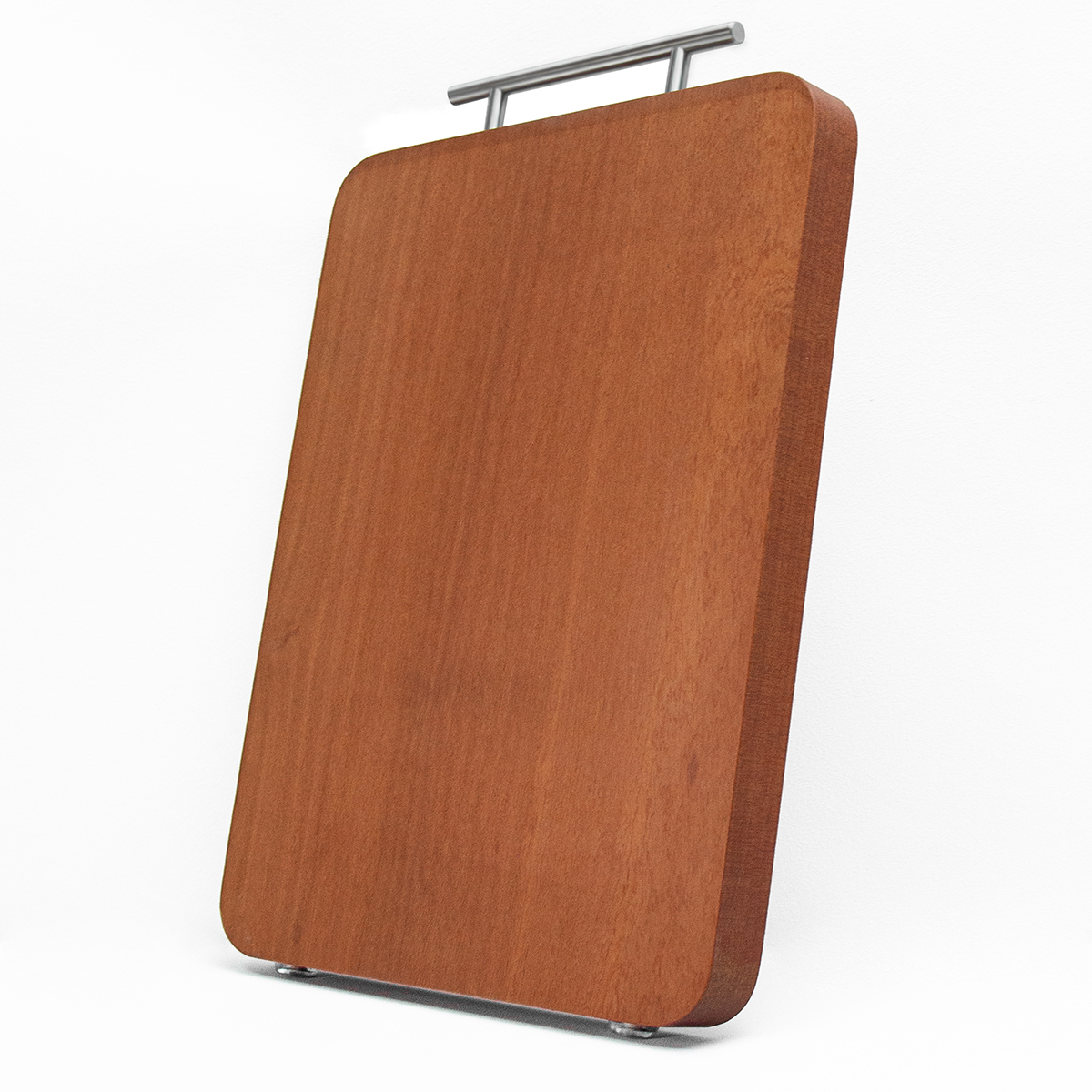
Wood Species Selection for Durability and Food Safety
Janka Hardness and Knife-Friendliness: Balancing Edge Retention and Board Longevity
The Janka hardness scale measures a wood’s resistance to denting and wear. For a custom chopping board, a rating between 900 and 1,500 offers the ideal balance: firm enough to resist deep gouges that trap moisture and bacteria, yet gentle enough to preserve knife edges. Hard maple (Janka ~1,450) is widely regarded as the gold standard—durable without excessive blade wear. Woods below 900—like black walnut (~1,010) or cherry (~950)—are softer and more forgiving on knives but require more frequent maintenance to prevent groove accumulation. Species above 1,500, such as teak (~1,155) or ipe (~3,600), risk chipping fine blades and may compromise long-term edge integrity. USDA research confirms that properly maintained, tight-grained wood surfaces actively inhibit bacterial growth—not because wood is inherently antimicrobial, but because dense grain limits moisture retention and microbial harborage. Match your species choice to your cutting habits: frequent heavy dicing benefits from slightly softer, self-healing woods; occasional precision slicing can leverage harder, more resilient timbers.
End-Grain vs. Edge-Grain Construction: Impact on Cutting Surface Resilience and Lifespan
Grain orientation fundamentally shapes performance. End-grain boards expose the cut ends of wood fibers, allowing knife blades to part them rather than sever them—a “self-healing” effect that minimizes visible damage and extends surface life up to five times longer than edge-grain alternatives. This construction also absorbs impact more effectively, reducing vibration and improving control. Edge-grain boards, with grain running parallel to the surface, offer greater rigidity and are easier to flatten during maintenance—but they accumulate scratches and micro-grooves faster, creating potential reservoirs for moisture and microbes. For daily-use custom chopping boards, end-grain remains the professional benchmark for durability and knife preservation. The trade-offs—higher cost, increased weight, and more complex fabrication—are justified by longevity and functional superiority. Edge-grain remains a practical, budget-conscious option for lighter-duty applications. Regardless of orientation, consistent oiling is essential to maintain dimensional stability and moisture resistance.
Domestic vs. Exotic Hardwoods: Sustainability, Allergen Risk, and FDA Compliance for Custom Chopping Board Use
Domestic hardwoods—including hard maple, black walnut, and cherry—offer proven food-safety performance, local sourcing advantages, and lower allergen risk. All meet FDA requirements for food contact surfaces under 21 CFR 177.2600 when finished appropriately and free of chemical treatments. Exotic species like teak or ipe bring higher density and natural rot resistance, but often carry sustainability concerns (e.g., CITES restrictions, questionable harvesting practices) and elevated costs. Some exotics contain extractives—such as quinones in rosewood or volatile oils in certain tropical species—that may trigger dermatitis or respiratory sensitivity in susceptible users. USDA guidelines explicitly advise against porous or open-grained woods (e.g., ash, oak, hickory) due to their tendency to absorb moisture and harbor pathogens. For most custom applications, domestically sourced maple or cherry delivers the optimal triad of safety, durability, and environmental responsibility. Always request documentation verifying sustainable harvest certification (e.g., FSC® or SFI®) and food-safe finishing compliance.
Dimensional and Ergonomic Design Essentials for a Custom Chopping Board
A well-dimensioned board improves both safety and cutting precision. When ordering a custom chopping board, thickness and weight distribution directly influence how stable the board feels during heavy use.
Optimal Thickness (1.5″–2.5″) and Weight Distribution for Stability and Precision Cutting
Thickness between 1.5 and 2.5 inches provides sufficient mass to anchor the board firmly on countertops—preventing slippage during forceful chopping or rocking cuts—while remaining manageable for daily handling. Boards under 1.5 inches lack inertia and may shift or warp over time; those exceeding 2.5 inches become unwieldy, especially for users with limited grip strength or mobility. Within this range, weight should be evenly distributed across the footprint: disproportionate mass at one end increases tipping risk when pressure is applied near edges. A balanced profile enhances control, dampens vibration, and supports cleaner, more precise cuts—particularly during extended prep sessions.
Non-Slip Base Integration and Functional Shape Options (e.g., Rounded Corners, Handle Cutouts)
Integrated non-slip features—such as recessed silicone pads or vulcanized rubber feet—eliminate reliance on damp cloths or suction mats, delivering consistent countertop adhesion without residue or slippage. Rounded corners reduce stress concentration at sharp angles, significantly lowering the risk of cracking or splintering during impact or seasonal movement. Handle cutouts—strategically placed near the board’s center of gravity—provide secure, ergonomic grip points for lifting and repositioning, especially critical for larger or heavier end-grain builds. These aren’t aesthetic flourishes; they’re functional integrations that transform a static slab into an active kitchen tool—enhancing workflow efficiency, user safety, and long-term structural integrity.
Food-Safe Finishing and Maintenance Protocols for Long-Term Performance
Mineral Oil, Walnut Oil, and FDA-Approved Polymer Finishes: Efficacy, Reapplication Frequency, and Shelf Life
A food-safe finish is non-negotiable for custom chopping boards—it seals pores, inhibits moisture absorption, and prevents warping or microbial colonization. Mineral oil remains the most trusted option: odorless, non-toxic, deeply penetrating, and FDA-compliant for food-contact surfaces. It requires reapplication every 1–3 weeks depending on use and climate, and has indefinite shelf life when stored away from heat and light. Walnut oil offers comparable penetration and enhances grain aesthetics, but carries two key limitations: it’s unsuitable for individuals with nut allergies, and its unsaturated fats oxidize over time—leading to rancidity if not wiped clean after each use and stored dry. FDA-approved polymer finishes—formulated from food-grade resins like polyurethane or modified acrylics—create a durable, water-repellent barrier that resists staining and reduces maintenance frequency to every 3–12 months. Unlike oils, these finishes cannot be fully removed without sanding, so application must be precise and even. Regardless of finish type, routine cleaning with mild soap and warm water—followed by thorough air drying—is essential to prevent moisture entrapment and extend service life.
Functional Personalization Features That Enhance Daily Utility
Juice Grooves, Dual-Surface Layouts, and Integrated Measurement Markings — Practicality Over Decoration
True personalization serves function—not just form. Juice grooves (typically ¼" deep and routed along one or more edges) effectively channel liquids away from ingredients during meat or citrus prep, minimizing cross-contamination risks and simplifying cleanup. Dual-surface layouts—where distinct zones are crafted from different woods or grain orientations—enable task-specific hygiene: reserve a harder, denser surface (e.g., maple end-grain) for raw proteins, and pair it with a gentler zone (e.g., walnut edge-grain) for produce or ready-to-eat items. Integrated measurement markings—laser-engraved or precisely routed—offer real-time portioning reference without introducing separate tools; common increments include ½", 1", and metric equivalents aligned with standard prep widths. Commercial kitchen efficiency studies show such purpose-built features reduce average cleanup time by up to 40%. Avoid decorative elements that compromise sanitation—like inlaid metals, recessed logos, or textured inlays—which create crevices where bacteria can persist. Prioritize seamless, flush integrations that preserve a continuous, easily sanitized cutting plane.
FAQ
What is the optimal Janka hardness rating for a chopping board?
An ideal Janka hardness rating for chopping boards is between 900 and 1,500. This balance ensures durability while preserving knife edges.
Which is better: end-grain or edge-grain chopping boards?
End-grain boards are more durable, self-healing, and easier on knives, whereas edge-grain boards are more rigid and suited for lighter-duty applications.
Are exotic woods safe for chopping boards?
Exotic woods can be safe, but some species may cause allergies or have sustainability concerns. Opt for domestic woods for better food safety and environmental responsibility.
How thick should a chopping board be?
A thickness between 1.5 and 2.5 inches provides stability and prevents warping, while still being manageable for daily use.
How often should you reapply mineral oil to a chopping board?
Mineral oil should be reapplied every 1–3 weeks depending on frequency of use and climate conditions.