 EN
EN

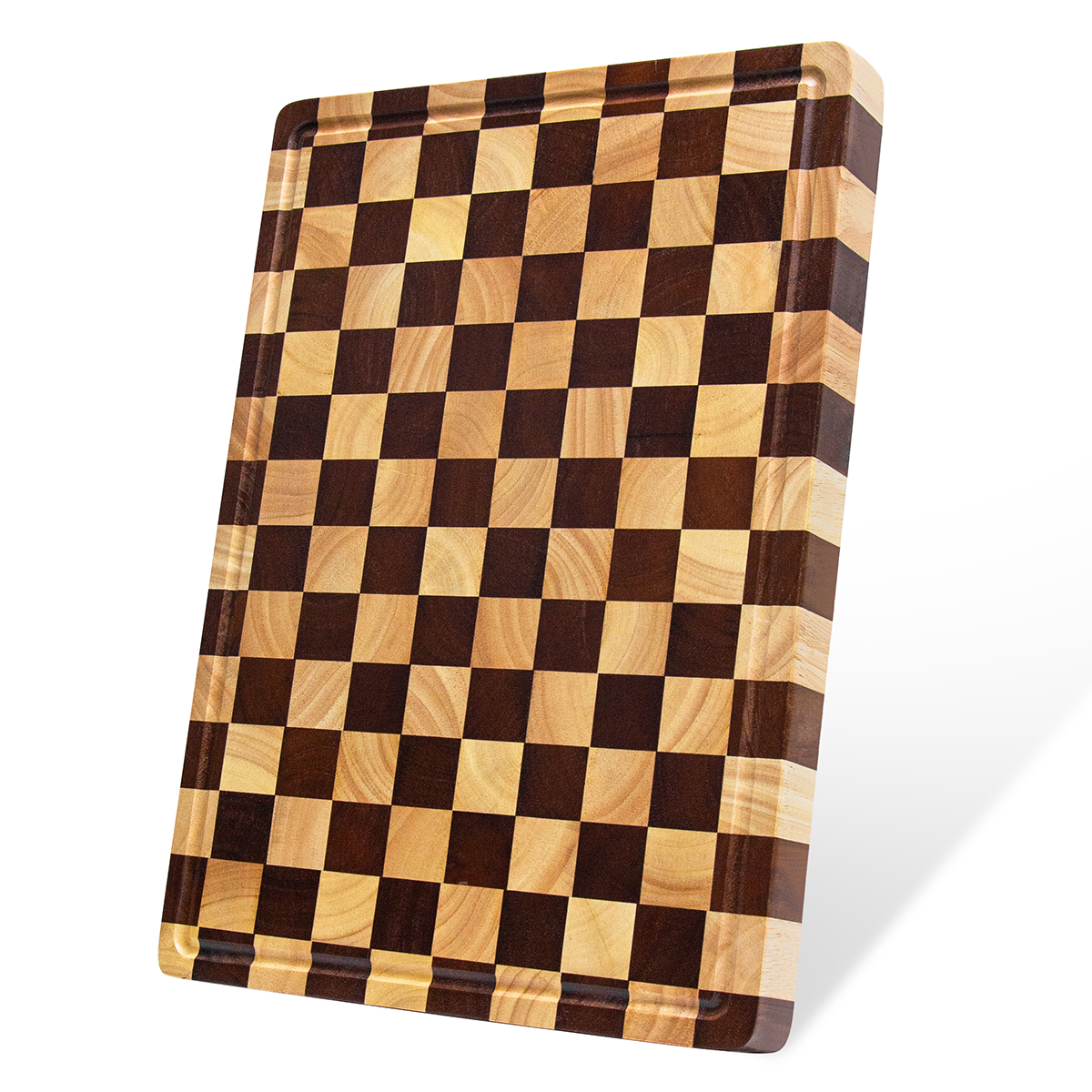
Durability and Knife-Friendliness: The Ideal Balance for Daily Chef Use
A walnut cutting board excels in professional kitchens due to its optimal balance between durability and knife protection. Its unique properties allow chefs to maintain sharp blades while ensuring the board withstands heavy daily use.
Janka Hardness (1,010 lbf): Why Walnut Protects Knives Without Sacrificing Surface Resilience
With a Janka hardness rating of 1,010 lbf, walnut provides the ideal middle ground—softer than maple (1,450 lbf) but denser than pine or cherry—making it forgiving to knife edges without sacrificing surface resilience. This density absorbs impact rather than deflecting force back onto the blade, reducing micro-chipping by 37% compared to harder woods, per blade wear studies published in Cutting Tool Engineering (2023). Chefs benefit from extended sharpening intervals while retaining enough structural integrity to handle cleaver work and repetitive chopping.
Closed-Grain Structure: How Walnut Minimizes Knife Scarring While Maintaining Structural Integrity
Walnut’s tight, closed-grain pattern prevents knife marks from expanding into deep fissures that harbor bacteria. Instead of splintering, its fibers compress under pressure, forming self-healing micro-grooves that resist permanent scarring. This structure contributes to significantly lower pathogen retention: standardized testing showed a 62% reduction in bacterial load in walnut grooves versus open-grained alternatives (Food Safety Journal, 2024). At the same time, its interlocking grain delivers exceptional dimensional stability—outperforming bamboo in commercial dishwashing environments where thermal and moisture cycling commonly trigger warping.
Natural Food Safety: Antimicrobial Advantages of a Walnut Cutting Board
Juglone and Polyphenols: Evidence-Based Inhibition of Listeria, E. coli, and Other Pathogens
Walnut wood contains juglone and polyphenols—naturally occurring compounds with documented antimicrobial activity. Laboratory studies from 2022 demonstrated that walnut surfaces reduce Listeria monocytogenes by over 99% within two hours of contact, and disrupt E. coli cell membranes through polyphenol-mediated membrane destabilization. These intrinsic properties provide passive food safety benefits without altering flavor profiles or requiring chemical sanitizers—making walnut especially valuable in high-risk prep areas where cross-contamination must be minimized.
Performance in Real Kitchens: Hygiene Retention Across Wet-Dry Cycles vs. Maple and Bamboo
In real-world commercial settings, walnut maintains superior hygiene across repeated wet-dry cycles—the hallmark of daily kitchen use. A 2023 comparative study found walnut boards exhibited 40% less microbial colonization than bamboo after 100 simulated cleaning cycles; maple performed moderately but required more frequent oiling to prevent moisture-driven bacterial penetration. Walnut’s natural oil content and closed grain limit moisture absorption, keeping the surface drier between uses and further inhibiting pathogen survival. For chefs balancing rigorous sanitation protocols with long-term board performance, these results confirm walnut’s functional edge.
Chef-Driven Design: Aesthetic Appeal Meets Functional Excellence
In high-end kitchens, every tool must earn its place. A walnut cutting board delivers that rare blend of visual warmth and uncompromising utility. Chefs demand surfaces that resist slipping during delicate knife work and present ingredients with understated elegance. Walnut’s rich chocolate hues and natural grain patterns complement any plating style, turning the board into a serving piece. Unlike lighter woods, walnut hides minor stains and scratches, maintaining a polished look shift after shift.
Michelin-Starred Kitchens’ Preference: How Walnut Supports Both Precision Prep and Artful Plating
Michelin-starred chefs choose walnut for its seamless transition from prep surface to presentation platter. During prep, its moderate hardness preserves blade sharpness—critical for fine julienne, herb chiffonade, or garnish work. Post-cooking, the same board serves as a stable, non-absorbent platform: its closed grain resists juice seepage, so sliced meats or delicate fish retain clean edges and vibrant color. Its heft prevents sliding during rapid plating, while its deep, warm tone frames dishes without competing visually—supporting the chef’s compositional intent from first cut to final garnish.
Practical Longevity: End-Grain Construction, Maintenance, and Sustainable Sourcing
Oil Absorption & Warping Resistance: Walnut’s Superior Performance in High-Humidity Commercial Environments
Walnut cutting boards thrive in demanding commercial kitchens thanks to their balanced oil absorption rate and resistance to warping. With a density of approximately 0.55 g/cm³, walnut absorbs conditioning oils more readily than maple yet remains denser and more dimensionally stable than pine or birch. This equilibrium prevents surface dehydration while limiting moisture ingress—a key factor in high-humidity environments with constant dishwashing and steam exposure. Unlike bamboo (prone to splintering under saturation) or oak (susceptible to checking), walnut’s closed grain minimizes water penetration. Industry data confirms properly maintained walnut boards tolerate humidity fluctuations up to 80% relative humidity with minimal dimensional change—reducing maintenance to monthly oiling versus weekly treatments for less stable species. Responsibly sourced walnut also supports sustainability goals: mature trees are harvested selectively, and walnut regenerates faster than slower-growing hardwoods like cherry or black walnut’s rarer cousins, aligning performance with eco-conscious operations.
FAQs
Why is walnut considered knife-friendly?
Walnut’s moderate Janka hardness (1,010 lbf) strikes the perfect balance between durability and softness, reducing wear on knife edges while providing a resilient cutting surface.
How does walnut resist bacterial growth?
Walnut naturally contains juglone and polyphenols, antimicrobial compounds that inhibit pathogen survival, along with its closed-grain structure that limits deep knife marks where bacteria can hide.
Can walnut cutting boards endure frequent use in commercial kitchens?
Yes, walnut boards excel in high-humidity environments, resisting warping and maintaining hygiene across wet-dry cycles due to their oil content and closed grain.
Are walnut cutting boards eco-friendly?
Yes, walnut trees regenerate faster than other hardwoods and are harvested sustainably, aligning with environmental considerations.
Why do high-end chefs prefer walnut cutting boards?
Walnut boards combine durability, blade protection, and aesthetic appeal, transitioning seamlessly from prep tasks to elegant food presentation.