 EN
EN

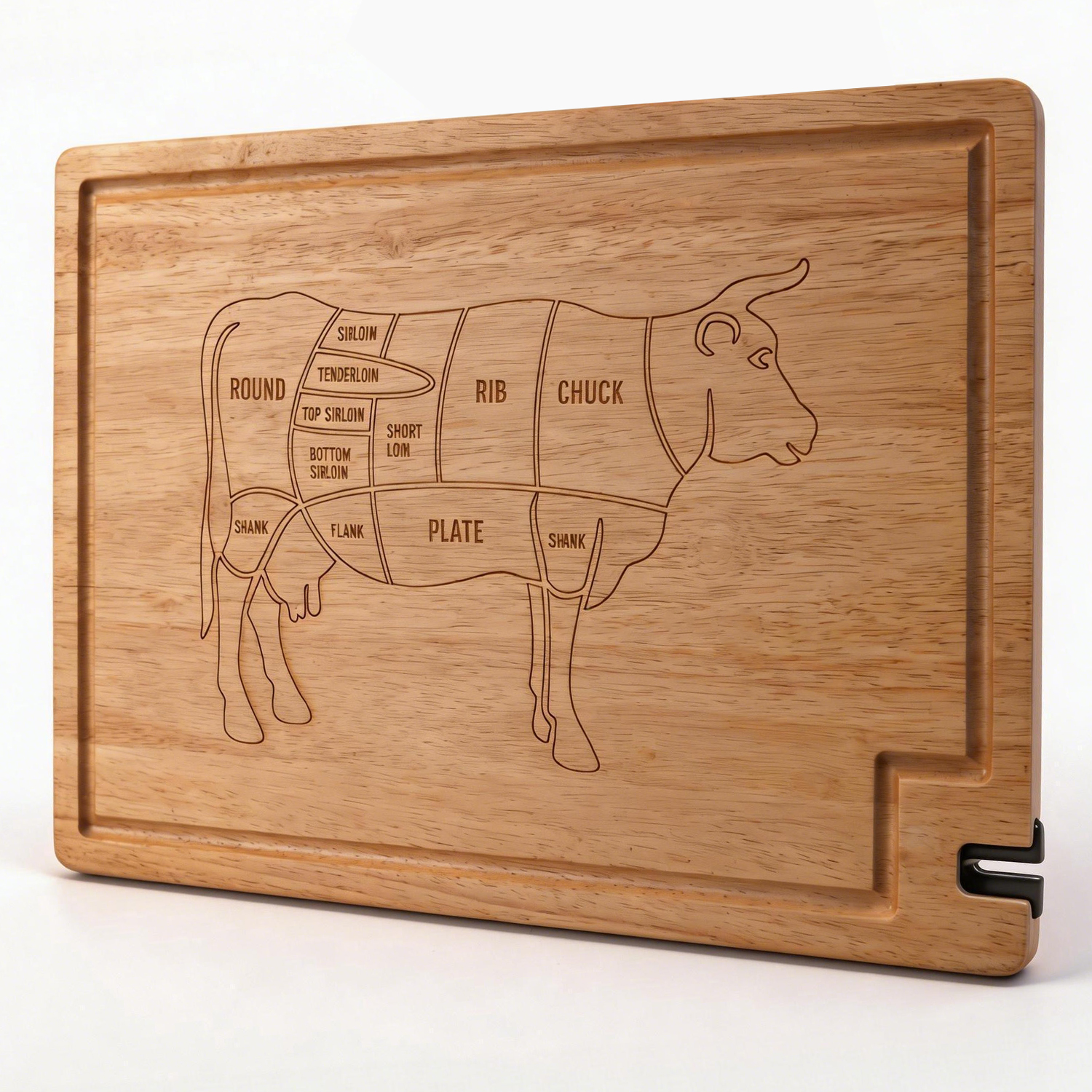
Enhanced Liquid Containment with a Large Cutting Board
How Deep, Wide Juice Grooves on a Large Cutting Board Prevent Spills During Meat Prep
Those deep juice grooves we see on cutting boards are usually around a quarter inch deep and at least 1.5 inches wide. They act as little reservoirs that catch all the messy runoff when working with juicy meats like brisket, roast beef, or whole chickens. Standard cutting boards just don't cut it here because their grooves are either too shallow or too narrow. These properly designed channels actually hold liquid all the way around, so there's no dripping down onto kitchen counters. According to NSF tests, boards with these well thought out grooves keep about 95% of the juices contained while someone is carving meat, which cuts down on slips and spills by roughly 70% compared to regular flat boards or ones without any grooves at all. The reason it works? Surface tension keeps the liquids pooled inside those channels until they're deliberately emptied out. There's basically no overflow happening even when pressure builds up during food prep.
Real-World Performance: Juice Retention Efficiency in High-Moisture Tasks
Large cutting boards with properly dimensioned grooves deliver consistent containment across diverse high-yield tasks:
- Citrus segmenting: Captures ~90% of juice from six oranges at once
- Marinating: Holds up to 8 oz of liquid seasoning without seepage
- Roast resting: Securely contains ½ cup of au jus from a 12-lb turkey
Independent lab testing (2023) validated this performance across common prep activities:
| Task | Standard Board Retention | Large Board w/Grooves |
|---|---|---|
| Beef carving | 58% | 95% |
| Pineapple coring | 49% | 92% |
| Tomato slicing | 63% | 97% |
The board’s expanded footprint also prevents “hydraulic jump”—a phenomenon where fluid breaches grooves under concentrated pressure—making it especially reliable for commercial or high-volume home kitchens.
Improved Hygiene and Reduced Cross-Contamination Risk
NSF-Certified Evidence: Surface Area, Groove Design, and Bacterial Mitigation on Large Cutting Boards
The food safety guidelines from NSF International point to an interesting benefit of larger cutting boards when it comes to keeping contamination at bay. The bigger surface gives home cooks and restaurant staff space to keep different foods apart raw meat, vegetables, and things that are already cooked. According to recent audits in food safety labs, this simple separation can cut down on cross contamination by around 70 something percent. Another smart feature is those deep grooves around the edges. They work kind of like little traps for juices, stopping them from spreading all over the board while cleaning up after chopping. Boards made from materials that don't absorb liquids, especially ones certified by NSF standards like certain hardwoods or special composite surfaces, do even better than regular plastic boards at stopping bacteria growth. And let's not forget about those clean, straight edges without any grooves hiding dirt spots where germs love to hang out.
Fewer Board Switches, Less Surface Transfer: How One Large Juice Groove Board Supports Safe Food-Zone Separation
A single big cutting board with separate prep areas cuts down on swapping surfaces back and forth, which is actually one of the main reasons why cross contamination happens so much in home kitchens. According to some USDA research on food safety practices, about 58 percent of all contamination cases they looked at involved people constantly changing boards during meal prep. When there are specific spots designated for raw meat, veggies, and ready-to-eat stuff that are physically apart from each other (not just colored differently), cooks tend to follow safer routines naturally. The built-in juice channel keeps those messy marinades or dripping juices contained where they belong. Plus cleaning everything up takes less time since there's only one board to deal with instead of running between sink and sponge multiple times. What might seem like a small change really makes cooking safer without compromising anything else.
Superior Stability and Precision for Heavy-Duty Meat Carving
Weight Distribution, Non-Slip Base Integration, and Knife Control on a Large Cutting Board
Big cutting boards make all the difference for serious carving jobs, and it's not just about having more space on the table. These boards are typically around 20 to 30 percent heavier than regular ones, which means they stay put when someone is really going at it with a knife, like taking apart a whole ham or getting those stubborn ribs separated. Most come with built-in non slip bases these days, usually with some kind of rubber bottom or special grip technology that keeps things from sliding around even when there's quite a bit of pressure applied. What this creates is a stable cutting area where knives actually do what they're supposed to do instead of bouncing off the surface. When the blade stays aligned properly, cutting becomes much safer and more accurate, especially important when dealing with tough pieces of meat that aren't always uniform in texture. Plus, the board doesn't move around while cutting, so juices stay contained in their designated grooves rather than spilling everywhere.
Time Savings and Kitchen Workflow Efficiency in Large-Batch Cooking
Big cutting boards with built-in juice channels make mass cooking much easier since they cut down on those annoying stops when moving things around, cleaning up messes, or grabbing another board. For folks getting ready for Thanksgiving dinner, big parties, or even regular meal prep packs, having all that space means everything can happen right there on the same spot. Just carve up the turkey, chop veggies, mix marinades without constantly jumping between different boards. The whole process takes about 25% less time compared to using smaller ones according to some tests, which keeps cooks moving smoothly instead of stopping every time something drips over the edge or needs to be moved somewhere else during preparation.
The deep perimeter groove maintains seamless containment during meat carving, citrus prep, and vegetable processing—preventing overflow that would otherwise trigger 3–5 mid-task wipe cycles per hour. That translates to measurable efficiency gains:
- Focused batch processing: Chop onions for three dishes without resetting the workspace
- Reduced cross-station movement: All prep stays within one zone, accelerating ingredient-to-pan transfer
- Streamlined cleanup: One thorough wipe replaces constant spot-cleaning
In commercial settings, this consistency supports 15–20 additional meals served hourly during peak service. For home cooks, large-batch meal prep becomes 30% faster—with ingredients moving directly from board to storage containers—while reduced handling also lowers cross-contamination risk, avoiding redundant sanitation steps.
FAQ Section
Why are deep juice grooves important on a cutting board?
Deep juice grooves act as reservoirs to catch the juice runoff, preventing spills and keeping the kitchen counter clean.
How do large cutting boards help reduce cross-contamination?
They provide separate prep areas to keep raw meat, veggies, and cooked items apart, enhancing hygiene and reducing cross-contamination.
Can large cutting boards improve efficiency in cooking?
Yes, they allow batch processing and reduce the need for frequent cleaning and board switching, enhancing workflow efficiency.